Microwaves
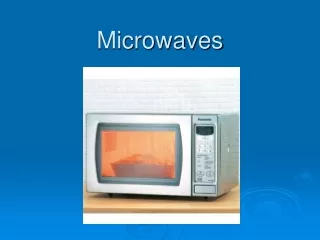
Discover the origins of the microwave oven, invented by Dr. Perry Spencer in 1945 after an accidental encounter with microwaves emitted from a vacuum tube. This pivotal moment led to the creation of a revolutionary cooking appliance that heats food quickly and efficiently by generating electromagnetic waves, causing water molecules to move and create heat. Learn about the best and worst containers for microwaving, essential techniques for even cooking, and crucial safety tips to prevent burns and explosions while using this everyday kitchen marvel.

Microwaves
E N D
Presentation Transcript
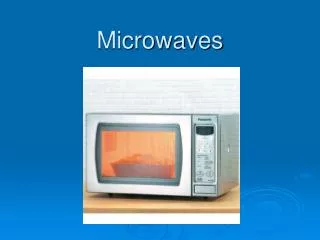
History of Microwaves • In 1945, Dr. Perry Spencer, a scientist, was working in a lab when he felt some heat on his hand. The heat was coming from microwaves. These were being emitted from a nearby vacuum tube. Dr. Spencer was curious and place a chocolate bar near the tube. Within seconds, the chocolate melted. That sticky mess was the beginning of a brilliant idea – the microwave!
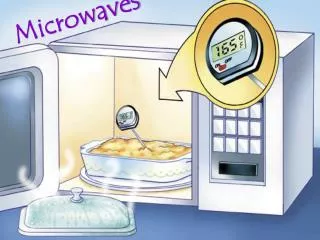
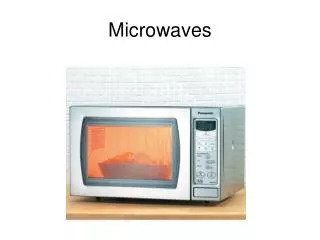
How Does a Microwave Work? • The microwave oven generates electromagnetic waves (called microwaves) which makes water move. This motion leads to friction, and friction leads to heating. friction heating motion
How Does a Microwave Work? • This heat starts on the outside of the food and moves in. • The denser the food the longer it will take to cook. • Water will heat faster than a burrito, because a burrito is more dense than water.
Microwaves • Microwaves are attracted to foods that are high in: sugar fat water
Microwave-able Containers • Paper • Plastic • Glass • Microwaveable Dishes
Non-Microwave-able Containers • Metal • Dishes with gold or silver on it.
Acceptable coverings for microwave dishes: • Paper towel – to absorb moisture, spatters, and spills. • Wax paper – holds in some of the moisture • Plastic wrap – hold in moisture
Techniques for Microwaving • Stirring: To pull heated part of the food to the center • Turning over: To microwave all sides • Rotating: Makes cooking even • Pricking: To keep foods from exploding • Standing Time: To allow foods to complete its cooking by placing on the counter.
Cooking Time • These will increase the cooking time and standing time. • The volume of the food • Example: Small potatoes versus large potatoes • The quantity or number of food • Round containers will cook more evenly than square containers.
Microwave Safety • To prevent burning yourself from microwave cooking, remember: • Foods can create hot containers • Items can explode (eggs, potatoes). Pierce them with a fork. • Lifting the cover or plastic from the food can cause a burn. • Hot steam escaping can cause a burn