Download
1 / 5
50 likes | 157 Vues
This project by Kate Weidner and Juliana Strange explores the three branches of government: Judicial, Legislative, and Executive. The Judicial Branch interprets laws and ensures they align with the Constitution, having the power to overturn unconstitutional laws and presidential actions. The Legislative Branch creates laws and can override presidential vetoes and refuses appointments. Lastly, the Executive Branch implements laws, commands the Armed Forces, and appoints judges. This presentation clarifies each branch's functions and their interconnected roles in governance. Thank you for watching!

E N D
Branches Of Government Project By: Kate Weidner and Juliana Strange
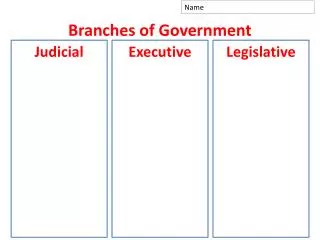
Judicial BranchDecides if laws follow what the constitution says and decides what the laws mean. Can overturn laws it finds are against the constitution. Can overturn president’s actions if it finds them to be against the constitution.
Legislative Branch They make the laws & establish the taxes. Can override President’s veto. Can refuse to appoint the President’s candidates for judgeships.
Executive Branch Carries out the laws and makes commands to the Armed Forces. They can veto laws Congress has passed. Appoints Supreme Court justices and other federal judges.
Thanks for watching! BBYYEE!