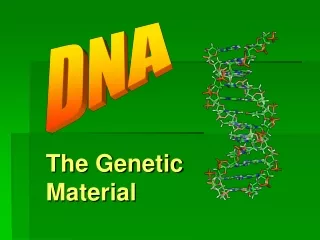
Understanding DNA Structure and Replication: Key Concepts and Processes
This overview discusses the fundamental components of DNA, including deoxyribose sugar, phosphate groups, and nitrogenous bases (adenine, thymine, cytosine, and guanine). It explains the pairing rules of these bases, where adenine pairs with thymine and cytosine pairs with guanine. The nucleotide, the basic unit of DNA structure, is defined and illustrated. Additionally, the process of DNA replication is described, highlighting how DNA unwinds and unzips to form complementary strands before re-twisting. This detailed breakdown enhances the understanding of DNA's functional role in genetics.

Understanding DNA Structure and Replication: Key Concepts and Processes
E N D
Presentation Transcript
The genetic material Notes: Pages 6 & 7
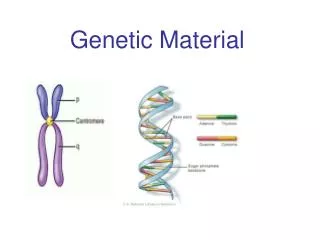
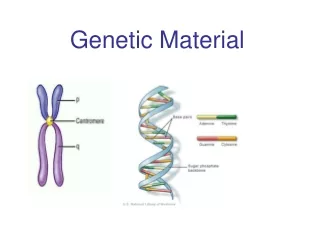
A dna molecule is composed of the following chemical groups: • 1. 5-Carbon Sugar called DEOXYRIBOSE • 2. Phosphate Group • 3. Nitrogen Base (A, T, C, or G)
The four (4) nitrogenous bases are: • A. Adeneine (A) • B. Cytosine (C) • C. Guanine (G) • D. Thymine (T)
purines PYRIMIDINES ADENINE CYTOSINE GUANINE THYMINE • In a DNA molecule: • Adenine always pairs with THYMINE • Cytosine always pairs with GUANINE • Thymine always pairs with ADENINE • Guanine always pairs with CYTOSINE
NUCLEOTIDE (define & illustrate) • A nucleotide is the BASIC UNIT of structure of a nucleic acid, such as DNA. It consists of a 5-carbon sugar, a phosphate group, and a nitrogen base.
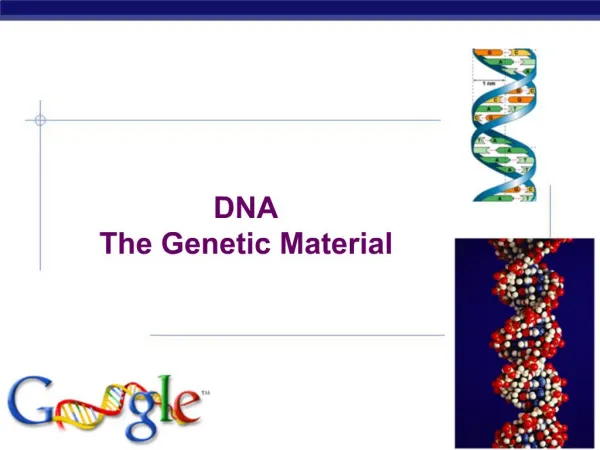
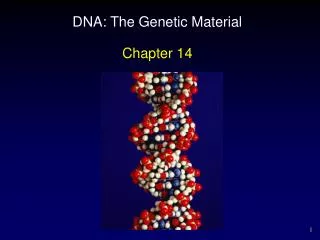
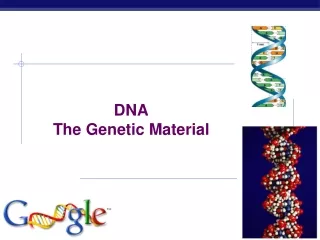
A molecule of dna can be described as a … • Double Helix • It is often called the WATSON-CRICK Model of DNA, named after two of the scientists that first described its structure.
Complete the complementary strands of DNA for the following examples: • ATTGCTAACC TAACGATTGG • GGCCTTAAGC CCGGAATTCG • NOTE: In reality, the strands would be lined up NEXT to each other like this:
Dna replication (Define) • The process by which a DNA molecule makes an EXACT copy of itself • Base pairs are held together by HYDROGEN BONDS • Before copying begins the DNA molecule UNTWISTS & “UNZIPS” • Bases of free nucleotides in the nucleus form the COMPLIMENTARY strands
DNA replication COMPLEMENTARY STRANDS FORM DNA UNTWISTS DNA “UNZIPS”