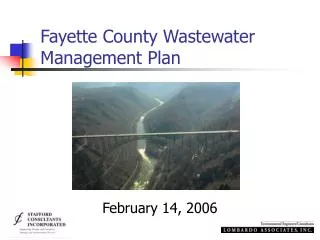
Fayette County Wastewater Management Plan
290 likes | 403 Vues
The Fayette County Wastewater Management Plan outlines strategic actions to enhance wastewater infrastructure and safeguard public health. Key components include assessing current needs, reviewing previous efforts, defining alternatives, and establishing a preferred plan. Community involvement is essential, with resources available via the project website, local libraries, and the County Courthouse. Future steps will secure funding for prioritized projects through grants and loans, ensuring implementation efficiencies. This combined effort aims to create a sustainable wastewater system for the community.


Fayette County Wastewater Management Plan
E N D
Presentation Transcript
Fayette County Wastewater Management Plan February 14, 2006
Project Overview • Form Project Advisory Committee • Develop Public Participation Plan • Review Previous Planning Efforts • Assemble Community Profile • Define Existing Wastewater Needs • Id and Screen Options • Evaluate Alternatives and Develop Preferred Plan
How can you learn more? • Project website • Meeting minutes • Project reports http://www.lombardoassociates.com/ fayette_county_west_virginia.php • County libraries, National Park Service, 3rd Floor of County Courthouse • Project reports
Wastewater Management Sectors • Onsite systems • Cluster systems • Recreational areas • UIC systems • Package plants • PSD & municipal WWTFs • WQ monitoring program
Onsite Systems CIP Management system requirements
Cluster System CIP • Current onsite areas proposed to have cluster systems (mini-sewers)
UIC Systems CIP • Typically large septic systems
Recreational Areas CIP • Public education and outreach
Package Plant CIP • 19 systems total • 4 minor upgrades • 15 total replacement
Variables Affecting CIP • Percent of onsite systems in failure • CSO/SSO abatements costs • Needed collection and treatment system improvements for PSD & municipal WWTFs
What’s next? • Adoption of the plan by Fayette County Planning Commission and Fayette County Commission as the official wastewater plan of the county • Secure funding for prioritized projects (availability and suitability of funding sources may affect implementation schedule)
Implementation Steps • Filing of the plan with the West Virginia Infrastructure Council as a pre-application for acceptance for technical feasibility • Formal application through IJDC for the initial, selected projects, with local recommendation of funding sources • Follow-up with the agencies recommended by IJDC • Filing of individual funding applications made by Region 4 Planning and Development Council in consultation with the Fayette County Resource Coordinator
Funding Sources • Grants • Loans • Increased rates • Water quality protection fee
Funding Sources • State Revolving Loan Fund • HUD Small Cities Block Grant • Appalachian Regional Commission • Special appropriation request through Congress • Rural Utility Service • Army Corps of Engineers • Funds from a private purveyor of wastewater treatment services interested in an O&M contract on the system • Local bond issue using the Tax Increment Financing Statute or Industrial Development Bond Statute
Funding Issues • Affordability and willingness to pay must be considered • Need for rate increases for “rainy day funding” for repair/replacement • Need for wastewater fee for unsewered areas = business opportunity for PSDs/ municipalities