Download

1 / 8
80 likes | 199 Vues
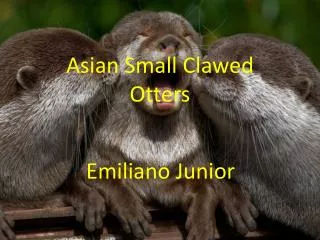
Explore the fascinating world of Asian Small-Clawed Otters, a family-oriented species found across Southeast Asia, including Indonesia and Southern China. Delve into their habitat preferences, primarily freshwater streams and coastal regions, and learn about their diverse diet, which includes crabs and snails. These nocturnal creatures are known for their playful behavior and complex social structures. Despite being endangered, their populations are on the rise, thanks to conservation efforts. This guide provides insights into their daily life, reproductive habits, and interesting facts about these remarkable otters.

E N D
Asian Small Clawed Otters In The Wild By: Adamaris
Table of Contents Family Structure Habitat • Food and Water Interesting Facts Daily Behavior Bibliography
Habitat • Indonesia, Southern China, Southern India, The Philippines, Southeast Asia • Go to dense foliage to protect each others from their enemies • Freshwater, Streams, Rivers, Creaks, Costal Region • River Hongshui, River Yangtze Home
Food and Water • Crabs, Mussels, Frogs, Snails, Fish, Crayfish, Snakes, Clams, Earthworms • Find food by riverbank • Eats 22% to 25% of its body weight a day to survive • They are omnivores Home
Daily Behavior • Live in family groups of 12 individuals • Play fetch and throw themselves to water to catch stick before it sinks • Hold breath underwater for 4 minutes • Asian Small Clawed Otters are nocturnal • Otters have a dozen or more calls including distress call for trouble and help • Otters have to be 2 years to mate • Mother takes care of otter for at least a year Home
Family Structures • 2 years old to be able to mate • Otters have 1 pup at a time • Pup is active within 1 day after birth • No teeth and eyes closed for 5 weeks after born • Pup can swim 2 weeks after birth • Mother stays for 1 year after birth • Male and Female stay together for 3 days after mating • Mate anytime of year • Pups cry while mother is gone • Pups can float when born • Travel in packs of 12 Home
Interesting Facts • Endangered but population is growing • Can die by pollution in the water • Take very good care of fur groom everyday • Special muscles to close ears and nose automatically underwater • Short legs 5 toes webbing between each toe • Fur on feet all the way except fingers • 1-2 babies at a time maximum 6 babies at a time • Sounds 12 different calls help and trouble Home
Bibliography Giles, Bridget. Sea Otters. Danbury: Grolier Educaitonal,2001 http:\\Nationalzoo.si.edu\publicaitions\zoogoer\2006\5otters.ctm 11/8/12 http:\\Nationalzoo.si.edu\animal\asiatrail\smallclaw_edotters\11/8/12 Home