Advanced Research Skills in Indigenous Anthropology: A Comprehensive Guide
160 likes | 276 Vues
This resource guide, prepared for Dr. L. Jane McMillan's Anthropology 332 course on Mi’kmaq Studies, aims to enhance students' research abilities in Indigenous anthropology. Topics covered include information seeking behavior, navigating the library website, evaluating information sources, and distinguishing between scholarly and popular literature. The guide offers practical tools like citation guides and access to librarian support, alongside critical thinking exercises to support thesis development. Ideal for students looking to strengthen their academic research skills in the field of Indigenous studies.


Advanced Research Skills in Indigenous Anthropology: A Comprehensive Guide
E N D
Presentation Transcript
Research & Resources @ The Library Prepared for: Dr. L. Jane McMillan Anthropology 332 Mi’kmaq Studies: Advanced Critical Issues in Indigenous Anthropology January 16th, 2012 Suzanne van den Hoogen, MLIS
Outline • Information Seeking Behaviour • Navigating the Library Website • Subject Research Guides • Evaluating Information • Scholarly vs. Popular Sources • Citation Guides & Resources • Ask a Librarian! • RefWorks
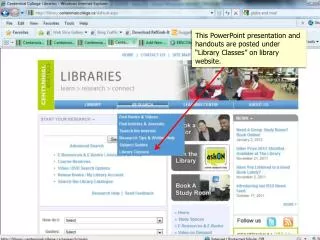
Virtual Tour: Exploring the Library website library.stfx.ca • Logging in to your library account • Searching the Library’s Collection • Journal Titles • Course Reserves • Favourites • Live Help
Subject Research Guides: Anthropology • Find Books • Find Articles • Google Scholar • Open Access • Writing & Citing • Liaison Librarians • Help
Subject Research Guides: Aboriginal Studies • Books in the Library • Reference Sources • Governance • Government • Health • Education • Journal Titles • Court Cases
Critical thinking: You must demonstrate that you are willing to examine popular beliefs, assumptions and opinions and weigh them against facts. Support your thesis statement with research. Analyse your assignment questions: What does this question mean? How much detail does your professor require? • Where do I begin? • Read about your topic – know your subject matter. • Brainstorm ideas • Think about Key Words & Key Concepts • Write your thesis statement
Evaluating Information • Accuracy • Authority • Currency • Bias
Questions to ask: Accuracy, Authority, Currency, Bias • Is this source reliable? • Is this source current? • Have opinions changed? • What are the current trends in this research area? • Are there any gaps in the research? Is something missing? • Who is the author? • Are they an expert in this field? • Do they represent multiple points of view or do they express bias for their own point of view?
Scholarly vs. Popular Sources Popular • Magazines • Written by journalists, students, popular authors, or no author listed • Flashy covers • Advertisements • Brief articles • Trade Journals: Business, Finance, Industry (Written by experts, but may not be peer reviewed) • Newspapers Scholarly • Journals • Written by experts • Evaluated by experts: “Peer Reviewed” • Authoritative Source • Usually include: • Credentials of the Author • Abstract • Bibliography • Specialized vocabulary • Reference List
Citing Information Sources APA Online Tutorial BF 76.7 P83 2010 American Anthropological Style Guide
Questions to ask: Library Workshops: Jan. 24 7:15 pm Jan. 26 2:15 pm Jan. 30 2:15 pm Feb. 1 7:15 pm One-on-One Sessions: Contact Suzanne
Ask a Librarian: We’re here to help you • In-Library • In-Person • Reference Desk • Personal Appointments • Email: refdesk@stfx.ca • Telephone: 867- 2242 • Online • LiveHelp
Thank You! • Suzanne van den Hoogen • svandenh@stfx.ca • 867-4535 • Liaison Librarian for: • Anthropology • Development Studies • Political Science • Sociology • Women’s Studies