4.21 Prokaryotic Genetics
This comprehensive overview explores prokaryotic genetics, detailing the defining features of prokaryotes, such as their unicellular nature and lack of membrane-bound organelles. Dive into the evolution of prokaryotes, their classification into two kingdoms, and the study of Escherichia coli as a model organism. Learn about DNA structure, plasmids, and mechanisms through which bacteria acquire new genes, including conjugation, transformation, and transduction. Discover the roles of essential enzymes in DNA replication and the restriction systems that protect bacteria from foreign DNA.

4.21 Prokaryotic Genetics
E N D
Presentation Transcript
4.21 Prokaryotic Genetics By Lance Goodridge and Devin Callanan
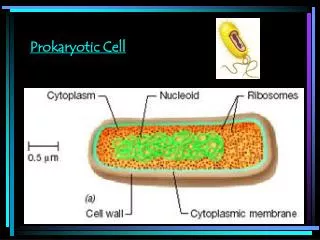
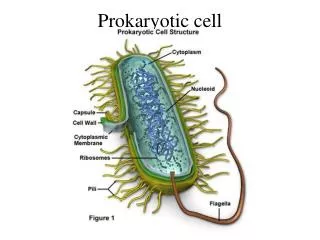
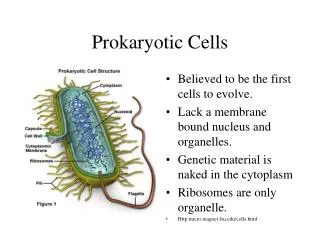
Defining Prokaryotes • Unicellular organisms • Lacks cell nucleus • Lacks mitochondria + chloroplasts
Defining Prokaryotes 2 • Very small • Live near water • Extremophiles
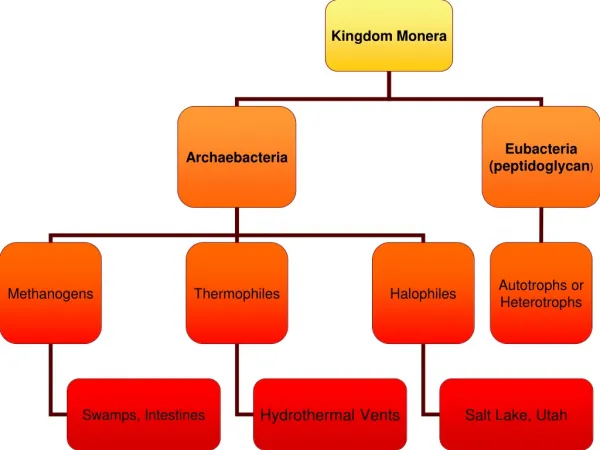
Evolution of Prokaryotes • Organized into two kingdoms • Very Old • Controversy
Escherichia Coli • The ‘guinea pig’ bacteria • Good for studying
Genomes • Prokaryotes have a genome • DNA = tight loop (shown right)
Plasmids • Also have Plasmids • Additional genes • Can be integrated into bacteria’s DNA (shown right)
OriC • Starts replication process • “Unzips” the DNA • Many AT bases
Helicase • 2 enzymes for DNA replication • Breaks H-bonds • “Supercoils” DNA • Note: The helix of the DNA was omitted for clarity =>
Gyrase • Releases tension • Rejoins strands • Rejoins bonds
DNA Polymerase I • Arthur Kornberg – 1957 • Key to DNA polymerization • Two types
Polymerase and Exonuclease • 5’ to 3’ polymerase • 5’ to 3’ exonuclease • 3’ to 5’ exonuclease
Other DNA Polymerases • Two other polymerases • Pol II • Pol III
Klenow Fragment • 5’ to 3’ exonuclease removed • Labels DNA • Nick translation
3 Ways Bacteria Acquire New Genes • Mainly reproduce asexually (binary fission shown => NOT an example of gaining new genes) • Three ways to acquire new genes
The F factor (Detailed) • F+: Bacteria w/ F plasmid + pili • F-: Does not have F factor or pili • Hfr: F factor integrated into host's chromosome + pili • F': Hfr w/o F factor + pili
Bacteria Conjugation • F-factor – bacteria grows pili • Forms conjugation tube • If plasmid integrates – Hfr
Transformation • Transfer of exogenous DNA into bacteria • Does not use bacteria or other viruses
Transduction • Infects bacteria with phages • Phage head + assembly shown => • Generalized Trans. • Specialized Trans.
Phage Reproduction • Phages have a lytic cycle => • Breakdown • Relatively quick cycle
Restriction system • Restriction enzymes • Restriction endonuclease • Restriction methylase • Two together = restriction system
Sites Referenced • “Principles of Genetics” Online Textbook • http://www.sciencegateway.org/resources/biologytext/pge/tools.html • http://en.wikipedia.org/wiki/Prokaryote • http://www.biology.ewu.edu/aHerr/Genetics/Bio310/Pages/ch15page/LN13final.pdf