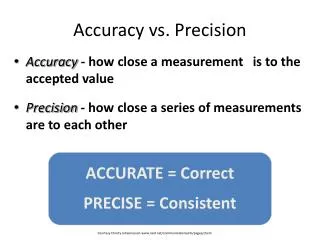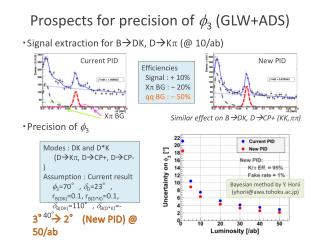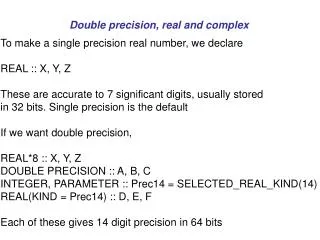
"Precision"
This progress report outlines the development of an innovative wheelchair headrest designed for patients with limited head and neck control. The project, a senior design initiative from Portland State University, investigates existing products, related technologies, and new concepts for optimal headrest adjustment. Key features include vertical, lateral, and depth adjustments, ensuring comfort and support for users. A thorough analysis of competitors highlights gaps in existing offerings, leading to a customizable design that enhances patient safety and accessibility.


"Precision"
E N D
Presentation Transcript
Progress Report • Design Group Members • Academic Advisor • Industry Sponsor
External Search • Primary Competitors • Figure 4: Whitmyer Biomechanixs - typical of what exists in local skilled care facilities; relatively affordable (~$200); provides only vertical and depth adjustment; requires an additional tool to make those adjustments; attaches to hardback chairs only. • Related Technologies • Figure 5: Flexible Positioning Arm - adjusts for a full range of motion and becomes rigid when the cam is locked. This device is made for light duty applications (up to 5 lbs.) and would need to be scaled up to support the weight of a headrest and head. • Figure 7: Positioners - XYZ positioners (right), such as those typically seen on optical microscopes. Universal balance positioners (left) generally used in welding applications.
Appendix B: Detailed PDS Document • Performance • Environment • Life in Service • Quantity • Size and Shape • Weight • Maintenance • Installation • Ergonomics • Safety • Materials • Manufacturing • Shipping • Packaging • Aesthetics • Quality and Reliability • Codes and Standards • Testing • Company Constraints and Procedures • Documentation • Legal • Market and Competition • Timeline • Disposal
Appendix D: Internal Search Document • Design Concepts: • Telescoping Pivot Bar in Channel • Incremental Vertical Bar on Lower Pivot Joint • Incremental Vertical Bar on Carriage • Curved Crossbar with Ratcheted Joint "Overhead Projector" • Curved Crossbar with Dual Upper Joints • Self-locking Worm Gear and Rack "Translated Motion" • Carriages on Worm Screw • Conclusion
The purpose of this document has been to present the concepts for a wheelchair headrest produced by our design team. Each concept contains ideas for the main function of the headrest, and well as individual sub-functions of the headrest. The methods of achieving vertical, lateral, and depth adjustment will be evaluated and combined to achieve the best positioning system possible. A method of attachment will also be chosen from the ideas presented above and attached to the headrest. Appendix E: Concept Evaluation and Selection Document • Concept Generation • PDS Criteria Consideration • Concept Evaluation Matrices • Concept Elimination • Concept Elimination: • Concept Elimination: • Final Design Concept
Lateral movement right 95th percentile • Lateral movement left 95th percentile • Extension 95th percentile • Flexion 95th percentile • Forces on the head • Assumption: • Extension Free body diagram 95th percentile • Extension Free body diagram 95th percentile