Mobilizing the Economy for War: World War II Home Front and Social Changes
80 likes | 193 Vues
During World War II, the U.S. government took significant steps to mobilize the economy for war. Key agencies like the Office of Price Administration regulated prices and enforced rationing, while the War Production Board oversaw the conversion of factories to wartime production. Unemployment dropped, wages increased, and union membership rose as more people joined the workforce, including women and African Americans. War financing through bonds and the Revenue Act of 1942 added to economic changes. However, discrimination persisted, with the “Double V” campaign advocating for victory against fascism and racial inequality.


Mobilizing the Economy for War: World War II Home Front and Social Changes
E N D
Presentation Transcript
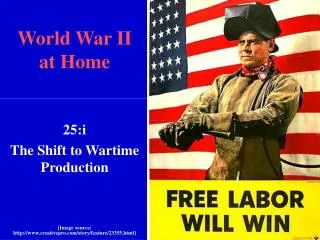
Mobilizing the Economy for War • The Government Steps In • Office of Price Administration – regulate prices, rationing • War Production Board – conversion of factories to wartime production • Convert consumer (cars, etc.) industries to war industries. • U.S. - The “Great Arsenal of Democracy”
Working and Financing the War • The Wartime Work Force • Unemployment decreases, wages rise • Union membership rises • Financing the War • Very expensive • Revenue Act of 1942 • War bonds • Deficit spending
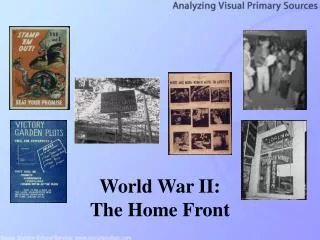
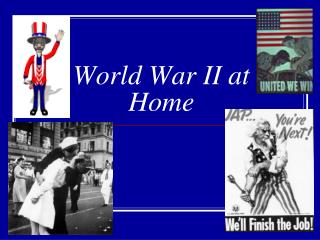
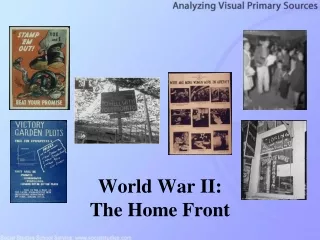
Daily Life on the Home Front • Shortages and Controls • Rationing • Ration books/stamps • Enlisting Public Support • Office of War Information • Victory gardens • Recycling
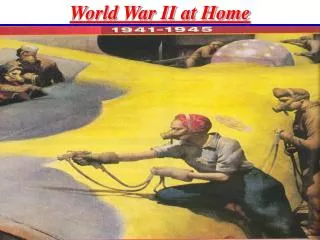
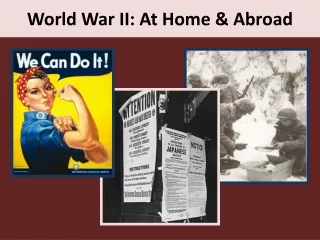
Women and the War • Changes for Working Women • Rosie the Riveter • New kinds of jobs • Recruited women workers • Lower pay, menial jobs • Benefits of Employment • Rewarding, out of the home • Jobs for African Americans • After the War • Pressured to return home after the war
The Struggle for Justice at Home • African Americans • Economic discrimination • Soldiers and segregation • “Double V” Campaign – victory over fascism AND discrimination • A. Phillip Randolph • Mexican Americans • Bracero program – Mex. Workers to Am. for farming • Zoot Suit riots – attacks on Mexican youth • Japanese Americans (Nisei) • Japanese Relocation • Internment camps