Effective Rebuttal Techniques in Debating: Insights from Warwick Debating Society
80 likes | 195 Vues
This training session, hosted by the Warwick Debating Society on November 23, 2011, focuses on the art of rebuttal in debates. Participants will learn how to identify and dismantle the strongest arguments from opposing speakers. Key strategies include rejecting premises, analyzing implications, and highlighting contradictions. The training covers various types of rebuttals, emphasizing the importance of a robust counter-argument to ensure effective engagement in debates on contentious issues such as capital punishment, juvenile justice, and gender roles in education.


Effective Rebuttal Techniques in Debating: Insights from Warwick Debating Society
E N D
Presentation Transcript
Training 23/11/2011 Rebuttal II Warwick Debating Society Proudly sponsored by
Things to note 1) You can show why different areas of the other side’s argument is wrong; the explanation can be wrong (i.e. the argument’s justification does not make sense); the example can be wrong (i.e. it is either irrelevant or invalid); or the link can be wrong (it is irrelevant to the debate). 2) When doing rebuttal you should try and aim for the strongest arguments that were made by the speaker before you.
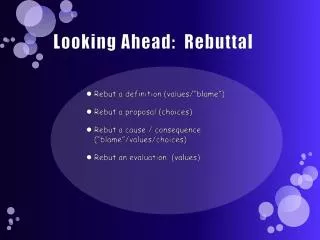
Different types of rebuttal • Reject the first premise. • Accept principle/analysis and show that it worsens the problem identified. • Mechanism/solution does not work at all. • Infringes on a more important principle. • Analysis given is not true. • Contradictions in argumentation
2. OG: THW always have Juveniles in the jury when trying juveniles in court.
3.OO: THBT It is illegitimate for governments to stop peaceful protests in public places
4.OO: THBT early childhood education in schools should undermine traditional gender roles.