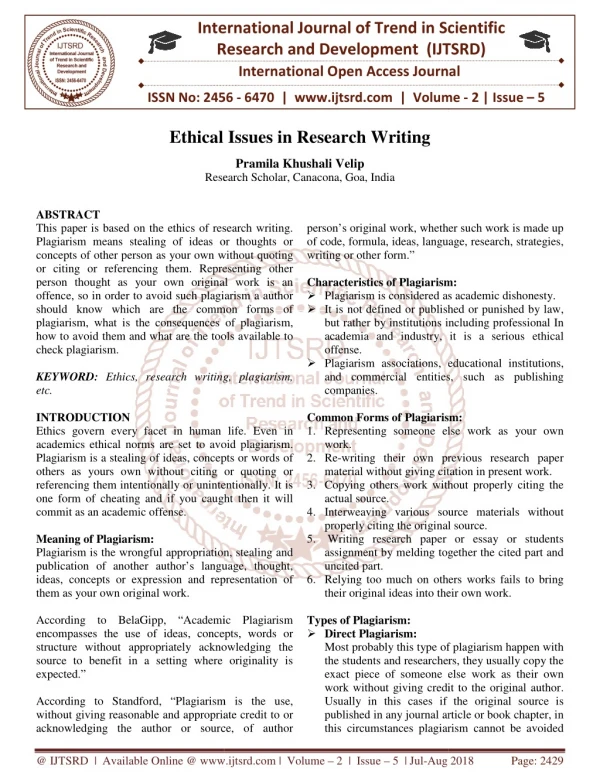
Ethical issues in research
Ethical issues in research. What is an ethical issue? How do they arise? What can we do about them? What are the rules and regulations that we must follow (BPS guidelines)?. psychlotron.org.uk. Ethical issues. Problems arising from conflict between What is necessary for our research

Ethical issues in research
E N D
Presentation Transcript
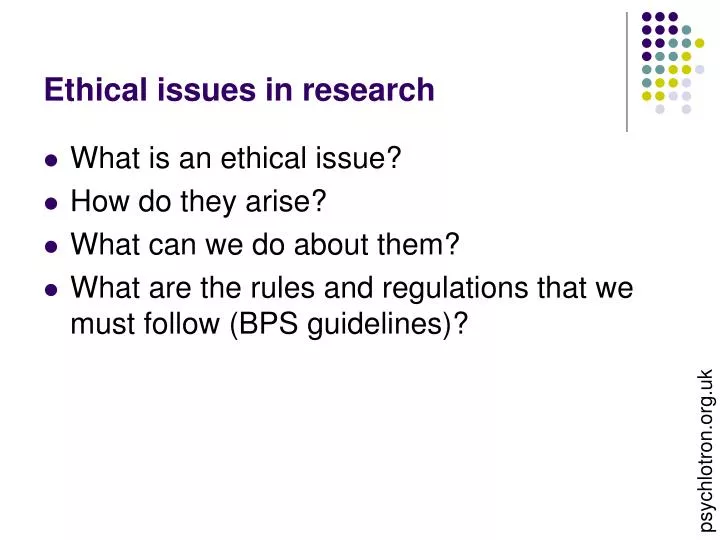
Ethical issues in research • What is an ethical issue? • How do they arise? • What can we do about them? • What are the rules and regulations that we must follow (BPS guidelines)? psychlotron.org.uk
Ethical issues • Problems arising from conflict between • What is necessary for our research • Our moral obligations towards our PPs psychlotron.org.uk
Practices that raise ethical issues • Getting informed consent • Deceiving PPs • Putting PPs at elevated risk of harm • Obtaining confidential information • Invading PPs’ privacy psychlotron.org.uk
Why do we care so much about the well-being of the PPs? Why don’t we just do what’s good for our science? psychlotron.org.uk
BPS Guidelines • Guidelines issued by the British Psychological Society (or equivalent professional body e.g. APA) • Clarify what is ethically acceptable in psychological research psychlotron.org.uk
Informed consent • PPs must be told about anything ‘that might reasonably affect their willingness to participate’ (BPS, 1998). • Can be withdrawn at any time, including during and after the study • NB: observational studies • NB: children (under 16yrs) psychlotron.org.uk
Deception • Should be avoided if at all possible, especially where it would raise other issues • Will it cause stress? • Would the PPs participate if they knew? • APA: only permissible where research is very important and no alternative method is available psychlotron.org.uk
Risk of harm • Risk should be no more than PPs expect in everyday life. • Physical and psychological harm (e.g. stress, damage to self image) • PPs should leave the study unchanged from how they entered it (NB: debriefing) psychlotron.org.uk
Confidentiality • All data should be confidential, all PPs should be anonymous and unidentifiable unless prior informed consent given • Can be problematic in case studies • Procedures should routinely anonymise PPs (e.g. through use of numbers; not recording names etc.) psychlotron.org.uk
Privacy • PPs’ right to privacy must be respected esp. since invasions of privacy may affect well-being and raise confidentiality issues • Respect social & cultural variability • PPs may be unwilling to answer certain Qs. • Observe only public behaviour in public places psychlotron.org.uk
Briefing • Before the study, researcher must obtain consent & ensure PPs understand tasks etc. • Explain nature of study & invite participation • Instruct PP about what is expected of them & what will happen • Confirm that they fully consent • Explain that they can withdraw at any time, for any reason psychlotron.org.uk
Debriefing • After the study, researcher should ensure that PPs are returned to their initial state & informed about the research they have participated in. • Ensure no harm has occurred • Obtain feedback about the study • Widen public understanding of psychology psychlotron.org.uk
Debriefing • Explain the aims and nature of the study • Explain any deceptions used • Reassure the PPs about their performance or behaviour • Offer retrospective withdrawal • Get feedback • Invite & answer questions psychlotron.org.uk