Download
1 / 15
210 likes | 989 Vues
This article delves into the vital biotic and abiotic components of aquaculture systems, detailing the needs of fish species, water quality parameters, nutritional requirements, and management practices. It discusses various management conditions—extensive, semi-intensive, and intensive culture methods—and their impact on fish health and growth. Additionally, it explores the objectives of both public and private aquaculture, emphasizing conservation, species recovery, and commercial production. Understanding these components helps optimize aquaculture practices for sustainability and productivity.

E N D
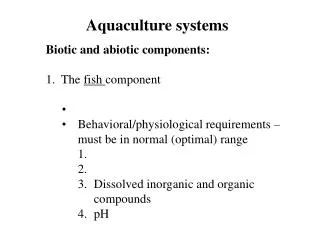
Aquaculture systems • Biotic and abiotic components: • 1. The fish component • Behavioral/physiological requirements – must be in normal (optimal) range • Dissolved inorganic and organic compounds • pH
Aquaculture systems • Biotic and abiotic components: • 2. The water component • – • 3. Pond or rearing area/container • Provide spatial requirements for species
Aquaculture systems • Biotic and abiotic components: • 4. Nutritional requirements • Provides energy requirements to meet – standard metabolic demands • Components associated with water quality
Aquaculture systems • Biotic and abiotic components: • 5. Management of the system • Fish culturist governs how well all components will be “balanced” • Management factors: • Record-keeping • Pond cleaning techniques and frequencies
Aquaculture systems • Management conditions: • Extensive culture: Low degree of input on manager’s part • Low water exchanges • Common in developing regions • Subsistence production
Aquaculture systems • Management conditions: • 2. Semi-intensive • Higher degree of management than extensive • Common in warmwater foodfish industry – catfish • Feed daily • Assess growth and mortality
Aquaculture systems • Management conditions: • 3. Intensive • Common in salmonid culture • Feeding of commercial feeds at high rates • Continual sampling and monitoring
Aquaculture • Public aquaculture: • Purpose: • Mitigation • Conservation/species recovery (ESA) • Management/sport fishing • Mitigation: • Columbia/Snake River systems
Aquaculture • Conservation: • Endangered species preservation • Recovery of listed stock
Aquaculture • Management/sportfishing: • Game fish stocking (non-salmonids) • Bass • Pike • Walleye • Put and take fisheries
Aquaculture • Private aquaculture • Purpose: • Commercial: • Food/table fish and other aquatic species • Fee fishing • Trout/catfish • Common in Midwest/east
Aquaculture • Bait fish – for sportfishing in many states • Forage fish • Tilapia/carp • Ornamental species • Aquarium/hobbyist trade • Direct or wholesale markets
Aquaculture • Components of private and public aquaculture: • Production: • All life stages • Marketing (important in commercial) • Sales and distribution • Processing waste • Disposal • Value added product
Aquaculture • Factors to consider in private aquaculture: • Feed availability/manufacturing • Equipment • Product development/marketing • Engineering/construction • Real estate
Aquaculture • Economics: • Variable costs • Eggs/fingerlings • Feed • Mortality • Utilities • Maintenance • Fixed costs: • Labor • Insurance • Taxes • Advertising