Understanding Plant Life Cycles: Alternation of Generations and Reproduction Methods
90 likes | 214 Vues
This overview explores the life cycles of plants, focusing on the vital process of alternation of generations, where plants switch between asexual and sexual reproduction. Seedless plants propagate by releasing spores that grow into new plants without fertilization. We also discuss the importance of pollination, defining self-pollination and cross-pollination. Key seed parts, including the embryo, cotyledon, and seed coat, are explained, alongside the processes of germination. Additionally, we distinguish between monocots and dicots, and highlight conifers as seed plants without flowers.


Understanding Plant Life Cycles: Alternation of Generations and Reproduction Methods
E N D
Presentation Transcript
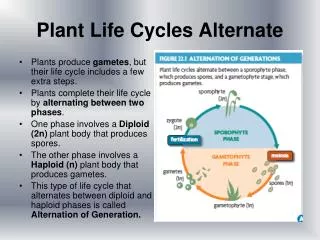
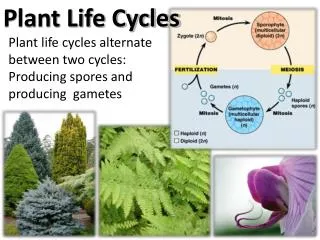
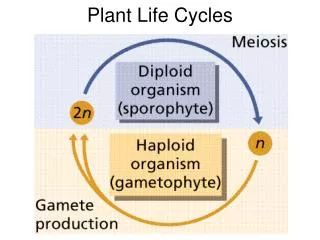
Alternation of generation – the process of alternating between asexual and sexual reproduction • Seedless plants begin by releasing spores that develop into new plants without fertilization. The new adult plant develops male and female structure that join and fertilize to create a new adult plant.
Pollination – the transfer of pollen from the stamen to the pistil • Pollen- a yellow powder that contains the sperm cells • Nectar – sweet liquid produced by flowers to attract pollinators • Self-pollination – a perfect flower with male & female parts pollinates itself • Cross-pollination- pollen from one plant pollinates the flower on another plant
Seeds • Seed has 3 parts • Embryo - the fertilized egg cell developing into a new offspring • Cotyledon-surrounds the embryo and is its food supply • Seed coat – tough outer covering that protects the seed
Germination – the process of the seed developing into a new plant • Monocot- seed with a single cotyledon, parallel vein pattern on leaves, flower petals in groups of three • Dicot – seed with two cotyledons, leaves have a branched vein pattern, flower petals in groups of 4 or 5
Conifers • Conifer – a seed plant with no flowers • Evergreens, pines and firs • Single tree produces male and female cones • Male pollen cells stick to female cones and developing egg remains there as it develops into a seed