
Molecular Mechanisms of Cell Death and Energy Metabolism in Apoptosis and Necrosis

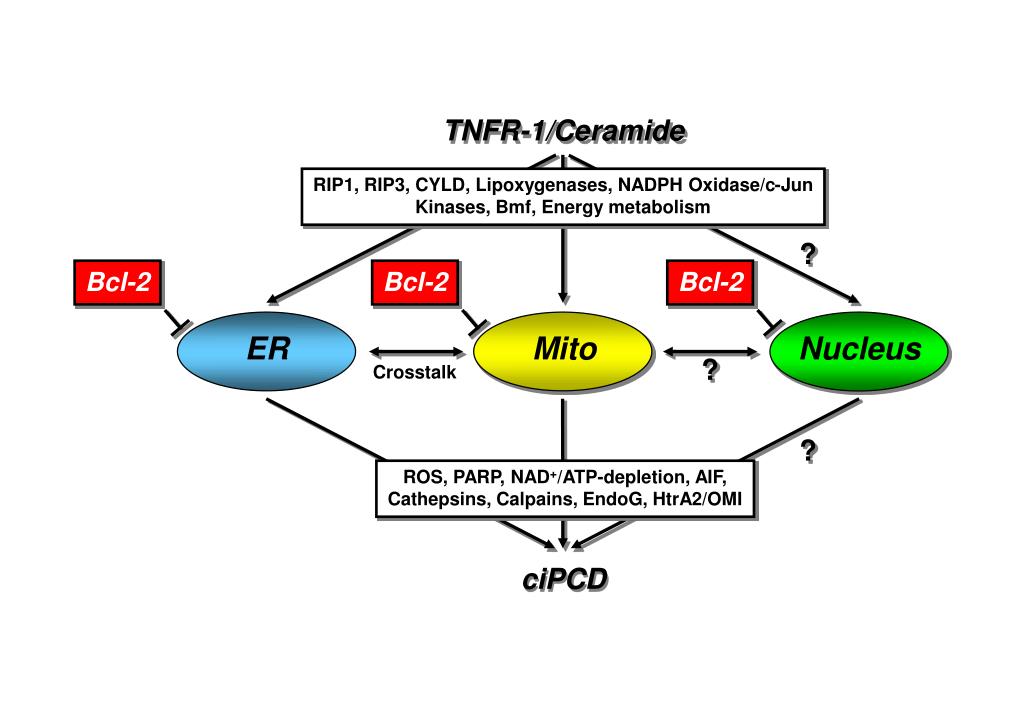
This study explores the intricate molecular interactions involving RIP1, RIP3, and CYLD in programmed cell death (PCD) pathways. It examines the role of lipoxygenases and NADPH oxidase in regulating c-Jun kinases and the impact on energy metabolism through TNFR-1 signaling and ceramide production. The crosstalk between mitochondria, the nucleus, and the endoplasmic reticulum (ER) is highlighted, with a focus on reactive oxygen species (ROS), PARP activation, and the roles of various proteases such as cathepsins and calpains. The study provides insights on the interplay of apoptosis and necrosis.
Télécharger la présentation 
Politique de téléchargement : le contenu du site vous est fourni TEL QUEL pour votre information et votre usage personnel ; il ne peut être vendu, concédé sous licence ni partagé sur d’autres sites sans l’accord de son auteur.Le contenu vous est fourni TEL QUEL, pour votre information et votre usage personnel uniquement. Téléchargez la présentation en cliquant sur ce lien. Lors du téléchargement, si vous ne parvenez pas à télécharger une présentation, l’éditeur a peut-être supprimé le fichier de son serveur.Pendant le téléchargement, si vous ne parvenez pas à obtenir une présentation, le fichier a peut-être été supprimé par l’éditeur.
F I N