Download
1 / 6
60 likes | 197 Vues
This article explores the intricacies of diving, focusing on the physiological effects of pressure changes on divers. As divers descend, pressure increases, dissolving air into their bloodstream. The ascent presents challenges, particularly nitrogen narcosis, where excess nitrogen causes confusion and impaired judgment. To mitigate risks, divers can use helium-oxygen mixes instead of air, as helium has lower solubility and reduces bubble formation. Safe ascent practices, including slow rises and exhalation, are crucial to prevent painful or fatal nitrogen release from the bloodstream.

E N D
By: Ramandeep and Maher Gases and Divers
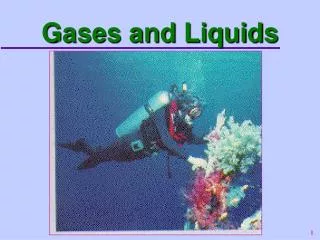
Gases and Divers • Pressure increases, when divers descend, just like in the atmosphere, but when you ascend • Most of the air dissolves into their bloodstream • The ascent is the challenge
Cont • Not the problem of carbon dioxide or oxygen • There are two problems: • Nitrogen narcosis • When the diver ascends
Cont • Solution: using a mix of oxygen-helium gas rather than air using air instead of nitrogen • A reason is that helium has a lower solubility in water and helium is much less likely of the bubble’s forming in the bloodstream
Cont • Nitrogen narcosis, in the fatty brains the solubility nitrogen gas increases causing divers to run out of time because of hallucination or forget the time • When the divers ascend, they have to ascend slowly so the nitrogen has time to be exhaled, because the nitrogen that is released in the bloodstreams can be severely painful or cause death
Gas Law • Boyle’s Law • When they dive, the exterior pressure increase dramatically • Scuba apparatus makes sure that the gas pressure from the cylinders is the exact same as the surrounding water • Though they have exhale while ascending so the interior lung pressure is reducing to match the decreasing water pressure