The Berlin Blockade: A Cold War Crisis (1948-1949)
The Berlin Blockade, lasting from June 24, 1948, to May 12, 1949, marked one of the first significant crises of the Cold War. Triggered by the introduction of the Deutsche Mark and the Potsdam Agreement that divided Germany, East Berlin's communist regime blocked all access to West Berlin, halting the supply of goods. This posed severe threats to the region and the Western Allies, leading to the Berlin Airlift by the United States and Great Britain, which delivered vital supplies. The blockade intensified global tensions and contributed to the formation of NATO and the Warsaw Pact.


The Berlin Blockade: A Cold War Crisis (1948-1949)
E N D
Presentation Transcript
Berlin Blockade By: Brendan Flaherty and Adam Schey
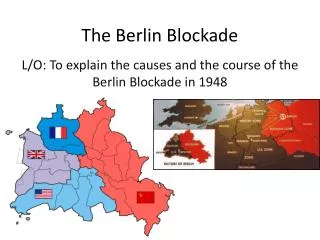
Context • June 24, 1948 –May 12, 1949 • Began with the installment of the Deutsche Mark • The Potsdam agreement divided Germany into four sectors. • was one of the first major international crises of the Cold War. • East Berlin and the communists blocked off all access points going into West Berlin which stopped all income of products.
Threat Analysis • Threat to region, the US and to the allies. • Threat to the region because if West Berlin surrendered to East Berlin then the capital would be completely communist. • Threat to US and allies because West Berlin was run by the allies and East Berlin was run by USSR. If East takes over then the Soviets take over.
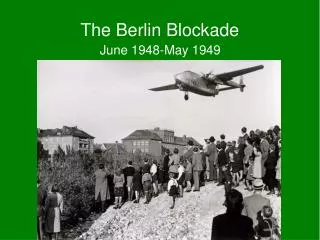
Actions/Responses • Berlin Airlift was conducted by the USA and Great Britain. Plan was to constantly airdrop supplies to the people of West Berlin since nothing was allowed in from an outside source on the ground. • Creation of NATO and the Warsaw Pact
Websites • http://www.coldwar.org/articles/40s/berlin_blockade.asp • http://www.history.com/topics/cold-war/berlin-blockade • http://www.britannica.com/EBchecked/topic/62154/Berlin-blockade-and-airlift • http://www.pbs.org/wgbh/amex/bomb/peopleevents/pandeAMEX49.html