Download
1 / 10
100 likes | 213 Vues
Explore the impact of industry, technology, and labor practices during the Industrial Revolution in Great Britain. Discover the advancements in manufacturing, transportation, and invention along with the societal changes brought about by this revolutionary period. Uncover the challenges faced by workers, including child labor, pollution, and poor working conditions, juxtaposed with the benefits of faster travel, cheaper goods, and improved communication networks. Learn how the introduction of industry and technology reshaped everyday life in Victorian England.

E N D
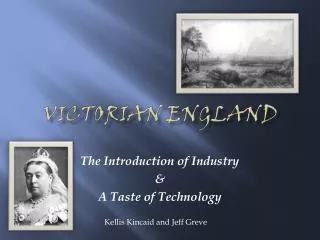
Victorian England The Introduction of Industry & A Taste of Technology Kellis Kincaid and Jeff Greve
The Industrial Revolution • Started in Great Britain • Capitalism helped it start • Invention of interchangeable parts marked the beginning. • Steam power, water wheels. • Railways, canals, and improved paved roads. Early railroad cars. Used child labor James Watt Steam Engine
Stuff used to make other stuff • Iron making had been perfected. • Cupola. Fire separate from metal. • Steel was invented. • Used only when necessary, expensive. • Strongest material invented at that time. • Reprocessed until all carbon was gone. • Rediscovery of concrete • Recipe had been lost for 1,300 years. • John Smeaton
Making lots of stuff • Manufacturing • Began with textile mills. • Steam engine – James Watt • Powered most factories • Also adapted for the railroad • Specialization
Child Labor • Coal mines – tunnels • Two thirds of workers in cotton mills • Children needed to work to provide income for family
The Iron Horse • First train – George Stephenson • Main components were iron and steel. • Able to carry a huge amount of goods and people • Run off of coal.
Other Inventions Spinning Jenny – Able to make 120 spools of yarn at once. Bobbin Net Machine – John Heathcoat. Manufactured lace. Jacquard Loom – Used punched cards to control machine. Telegraph – Sent messages as an electronic code. Stereoscope – Sir Charles Wheatstone. Allowed images to be viewed in 3D.
Pollution • Burning coal, oil and gas produces carbon dioxide and releases dirty particles into the air. • Deforestation led to erosion and poor air quality. • Factories would dump waste into rivers. • The Thames • Cholera epidemics • The “Great Stink” of 1858
The Underground • Cut and cover • Began in 1860 • Underground and aboveground • In 1860, 26k passengers a day
Effects on Everyday Life + Faster travel + cheaper goods + better communication + - Pollution – poverty – terrible work conditions -