DNA HISTORY
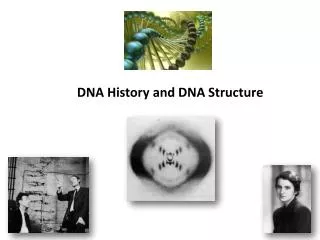
This article explores the fascinating components and structure of DNA, highlighting its crucial elements—phosphate, sugar, and the nucleotide bases adenine (A), thymine (T), guanine (G), and cytosine (C). DNA is visually represented as a spiraled, colorful ladder, with each color corresponding to one of the four bases—A pairs with T, and G pairs with C. Additionally, it discusses the historical context of DNA discovery, including the misidentified findings of Linus Pauling and the groundbreaking image captured by James Watson that elucidated DNA's true structure in collaboration with Francis Crick.

DNA HISTORY
E N D
Presentation Transcript
DNA HISTORY By: Aethan Calabia
What DNA contains • DNA contains • Phosphate • Sugar • Adenine (A) • Thymine (T) • Guanine (G) • And Cytosine (C)
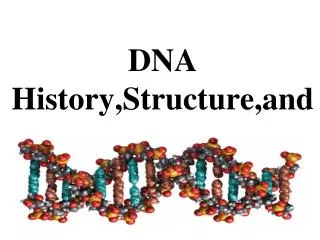
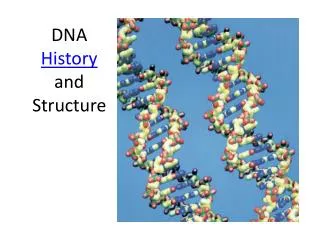
What DNA looks like • DNA looks like a spiraled colorful ladder and there are 4 colors, one for adenine, thymine, guanine , and cytosine. A always goes with T, and G with c on a dna molecule.
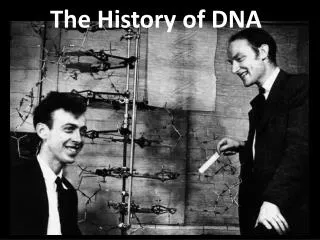
False discovery • Linus Paul thought that he found out what DNA looks like back then. A look in a picture by a man named James Watson proved what it actually looks like with Francis Crick.