The Vikings: Origins, Exploration, and Beliefs
The Vikings, seafaring explorers from Norway, Denmark, and Sweden, embarked on daring voyages in the late 8th century, leading to widespread trade, colonization, and conquests across Europe. They planted settlements from the British Isles to Italy and were the first Europeans to reach North America, establishing bases in places like Iceland and Greenland. Their rich mythology featured numerous gods and goddesses linked to nature and battle, with significant rituals and festivals, revealing their beliefs and values. Explore the profound impact of the Vikings on history and culture.

The Vikings: Origins, Exploration, and Beliefs
E N D
Presentation Transcript
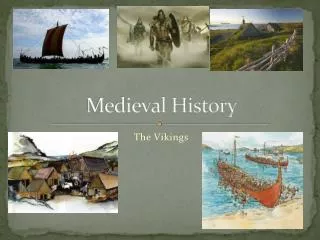
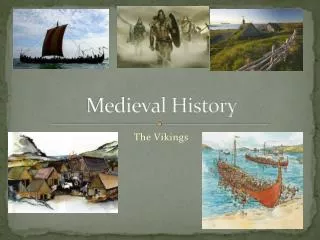
Medieval History The Vikings
Viking Explorers Toward the end of the 8th century CE, Viking seafarers from what we now call Norway (A), Denmark (B), and Sweden (C) embarked on a series of daring voyages for trade, colonization, and sometimes even plunder. Over the next 250 years, they planted settlements in Europe — from the British Isles (D) and France (E) to Italy (F) and Russia (G). Vikings from Norway, in particular, became the first Europeans, ever, to establish a passage across the Atlantic to North America. They did it in stages, setting up bases, as they went, in the Shetland Islands (H), Faroe Islands (I), Iceland (J), Greenland (K), and — for just a few years — in the place they called Vinland (L).
Religion and Rituals of the VikingsGods: The Vikings believed in many gods. They thought these gods helped their crops to grow and helped them in battle. There were two families of gods:
Festivals • The Vikings made sacrifices to the gods, especially during the three main festivals: At these festivals people ate horsemeat and drank bowls of wine. Sometimes animals given to the gods were not killed, but were dedicated to the god and the owner could still use the animal.