Download
1 / 5
50 likes | 156 Vues
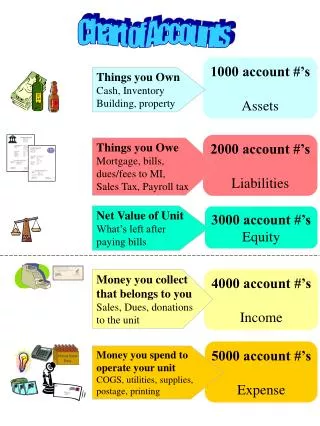
This guide provides an overview of the Chart of Accounts, which categorizes financial transactions into five main sections: Assets, Liabilities, Equity, Income, and Expenses. Learn about assets like cash and inventory, liabilities including mortgages and bills, and the significance of net value. Understand how income from sales and donations is collected, while also recognizing expenses such as utilities and supplies. By familiarizing yourself with these concepts, you can better manage your unit's financial health through tools like the Balance Sheet and Profit & Loss statements.

E N D
J&B Chart of Accounts 1000 account #’s Assets Things you Own Cash, Inventory Building, property 2000 account #’s Liabilities Things you Owe Mortgage, bills, dues/fees to MI, Sales Tax, Payroll tax Net Value of Unit What’s left after paying bills 3000 account #’s Equity 4000 account #’s Income Money you collect that belongs to you Sales, Dues, donations to the unit 5000 account #’s Expense Money you spend to operate your unit COGS, utilities, supplies, postage, printing
Balance Sheet Things you Own Things you Owe Net Value
Profit & Loss Money You Collect Money You Spend
Balance Sheet Things you Own Things you Owe Net Value
Profit & Loss Money You Collect Money You Spend