Download
1 / 14
140 likes | 255 Vues
Discover the key stages in your Beardie puppy's development from 8 weeks to 12 months. This guide emphasizes the importance of socialization, training, and routine care practices to enhance your puppy's growth and happiness. Learn how to handle energy bursts, teething, and behavioral challenges while reinforcing positive habits. Keep your home safe, establish a nurturing environment, and use effective training techniques tailored to your Beardie's curious nature. Bond with your puppy through play, exercise, and consistent routines.

E N D
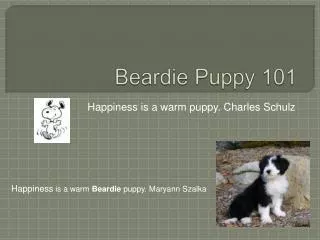
Beardie Puppy 101 Happiness is a warm puppy. Charles Schulz Happiness is a warm Beardie puppy. Maryann Szalka
8 – 12 Weeks • Self centered and curious, may experience fear period between 7-9 weeks • Love to explore, usually with their mouths • Need lots of sleep • Short attention span • Immune system not fully developed • Bladder/bowel control improves • Puppy-proof your home • Use a crate • Safe toys • Three minute training sessions ( they are little sponges) • Take the puppy outside often • Establish a grooming routine • Patience
12 – 16 Weeks • Lots of energy when awake • Senses and motor skills are developed • Inquisitive • Easily distracted • Crucial time for socialization • Better bladder/bowel control • Will start to test you (terrible twos) • Enroll in a puppy class • Housebreaking can begin in earnest (accidents are your fault) • Hand feed for a better bond • Patience • Reinforce lessons learned
4 – 6 Months • Major growth phase – teething and hormones • Budding adolescents • Avoidance period = fearful period (7-9 weeks) • Will test the limits and your patience • Keep things fun, prone to anxiety now • Socialize, socialize, socialize • Don’t take housebreaking for granted • Monitor weight • Puppy training classes • Focus on successes • Patience
6-9 Months • More growth and hormones = increased activity • May ignore or challenge you (males) • Renewed interest in chewing • Need lots of exercise • Reduce feedings to twice a day • Toys to burn off excess energy • Exercise together is great for bonding • Reinforce basic training commands • Don’t provide too much freedom too soon
9 – 12 Months • Sorry, still a puppy • Setbacks happen • Separation anxiety, defiance, independence • Should be more mindful and responsive • Boys and girls grow up • Reinforce good behavior • Monitor weight • Train • Play • Patience
Essential Puppy Vocabulary Your puppy’s name No (independent of puppy’s name) Let’s go or Heel Come Wait/Stay Break/Okay Sit Down Stand Settle Off Give
Your Puppy’s Basic Needs • Eating • Drinking • Going potty • Playing • Sleeping Whoever satisfies a need is held in high regard !
Eating Three times a day until 6 months old Feed in the same place (crate) Premium food Supplements ? Same time each day, if possible Ask puppy to sit before putting dish down
Drinking • Puppies need a lot of water • Bladder muscles last to develop • Keep it fresh • Bring your own when traveling • Restrict water after 7:30 pm • Offer ice cubes • Get up during the night
Sleeping • Puppies need to sleep • Quiet spot • Mat, crate, pillow • Overtired puppies will have meltdowns just like kids • Growth occurs while sleeping
Going Potty • What goes in must come out • A lot depends on what the breeder did • Need to be consistent and vigilant • Anticipate your puppy’s need • Papers create another step • Need to go after • Waking • Playing • Eating • Drinking
Playing • Safe toys, age appropriate • Need to chew • Exercise • Relieves boredom • Great for bonding • Foundation for training • Interactive games best • Refer to handout
Questions? Can we play now?