Giuseppe Arcimboldo
190 likes | 455 Vues
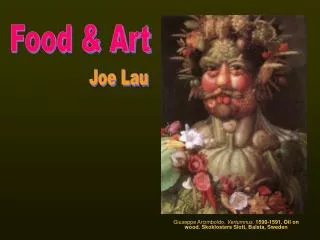
Explore the visionary artistry of Giuseppe Arcimboldo (1527-1593) as he defies Western thinking's tendency to separate parts for understanding. Arcimboldo's works, such as "Vegetables," "Spring," and portraits like "Vertemnus," illustrate that the whole is not merely a sum of its parts, but rather a complex relationship among them. His unique compositions capture the essence of nature through the interconnection of elements like water, fire, earth, air, and the seasons, inviting viewers to appreciate the holistic beauty of life.


Giuseppe Arcimboldo
E N D
Presentation Transcript
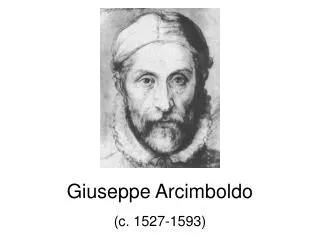
Giuseppe Arcimboldo (c. 1527-1593)
Preface Western thinking tends to rely on the separation of parts to understand the whole. Arcimboldo instinctively realized the importance of noticing the whole over the parts. The whole body is not a separation of parts, but a relationship between all of them.
“Vertemnus: Rudolph II”
![Giuseppe Arcimboldo [j OO zep'pā ärchēmbôl'dō] (1527-1593)](https://cdn2.slideserve.com/4995348/giuseppe-arcimboldo-j-oo-zep-p-rch-mb-l-d-1527-1593-dt.jpg)