Financing Your Education: A Guide to Financial Aid and Scholarships
100 likes | 225 Vues
Discover the essential types of financial aid available for college students, including grants, scholarships, work-study programs, and loans. This presentation outlines federal financial aid programs such as the Pell Grant, Supplemental Edu. Opportunity Grant, Perkins Loans, and Stafford Loans. Understand the application process through FAFSA, the importance of IRS Data Retrieval, and common errors to avoid. Learn about borrower rights, responsibilities, and effective strategies to maximize your financial aid. Take control of your education funding today!


Financing Your Education: A Guide to Financial Aid and Scholarships
E N D
Presentation Transcript
Presented by… Student Financial Services
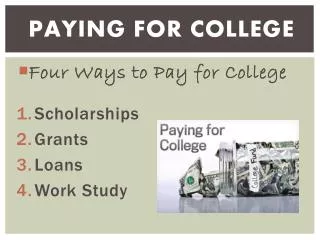
Types of Financial Aid Free Money Grants & Scholarships Earned Money Work-Study(Student Labor) Borrowed Money Loans
U.S. Department of Education Pell Grant* $5,550 Supplemental Education Opportunity Grant* $4,000 (AU Max. = $1,000) * FAFSA Required Federal Financial Aid Programs
U.S. Department of Education Perkins Loan 5% fixed, 9 month grace period (AU Max .= $1,500) Stafford Loans 5.6% fixed, Subsidized, 6 month grace period 6.8% fixed, Unsubsidized, 6 month grace period PLUS Loan 7.9 % fixed, within 60 days after last disbursement, unless a deferment is requested • Consider • Subsidized vs. Unsubsidized • Interest Rate • Grace Period • Know • Borrowers Rights & Responsibilities • Loan Repayment • Deferment & Forbearance • Entrance & Exit Counseling Federal Loan Programs
Applying for Financial Aid • Federal Aid PIN • FAFSA • Institutional Forms • Other Note: Communicate with each college to inquire about steps you need to take to have a complete application.
IRS Data Retrieval • While completing FAFSA, applicant may submit real-time request to IRS for tax data • IRS will authenticate taxpayer’s identity • If match found, IRS sends real-time results to applicant in new window • Applicant chooses whether or not to transfer data to FAFSA • Available end of January 2011 for 2011-12 processing cycle • Participation is voluntary • Could reduce documents requested by financial aid office • Not available to applicants with a recent change in marital status
Frequent FAFSA Errors • Parent and student Social Security Numbers • Divorced/remarried parental information • Income earned by parents/stepparents • Untaxed income • U.S. income taxes paid • Household size • Number of household members in college • Real estate and investment net worth
Steps for Students • Start planning for the future now • Complete the admission process • Apply for PIN and complete FAFSA • Receive, revise and edit the Student Aid Report (SAR) • Consider award letters • Respond to college offers • Advise school(s) of external scholarships • Renew the FAFSA every year!