Simulated Regional Climate Changes Using Different GCM Boundary Conditions for A2 Emissions Scenario
This study analyzes how simulated regional climate changes can vary based on different boundary conditions derived from General Circulation Models (GCMs). By employing two distinct GCM boundary conditions under the same A2 emissions scenario for the period 2071-2100 and comparing them to the 1960-1990 baseline, we illustrate mean annual changes in climate. Key focus areas include cloud dynamics, radiation forecasting, prognostic ice water content, and adjustments in cloud overlap using the ECMWF radiation scheme.

Simulated Regional Climate Changes Using Different GCM Boundary Conditions for A2 Emissions Scenario
E N D
Presentation Transcript
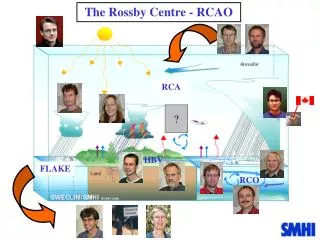
The Rossby Centre - RCAO RCA ? HBV FLAKE RCO
Climate scenarios Simulated regional climate changes can be different depending on the boundary conditions derived from the driving GCM Mean annual change simulated by RCAO using 2 differing GCM boundary conditions with the same A2 emissions scenario (2071-2100) minus (1960-1990)
Clouds and Radiation Outlook • Prognostic ice water • Xu-Randall cloud fraction formula • Change cloud overlap for the radiation • ECMWF radiation scheme (SW 6 bands, LW 16 bands)