Overview of DNA Structure and Replication Process
This review focuses on the fundamental structure and replication of DNA, the molecule that is the basis for all living organisms. DNA, or deoxyribonucleic acid, is composed of repeating units called nucleotides which consist of a phosphate group, a five-carbon sugar, and nitrogen bases. The nitrogen bases—adenine, thymine, guanine, and cytosine—pair specifically to form the double helix structure. During the S phase of interphase, DNA replication occurs, resulting in the formation of two identical DNA strands through the action of enzymes like helicase and DNA polymerase.

Overview of DNA Structure and Replication Process
E N D
Presentation Transcript
DNA Replication Unit 4 Part 1
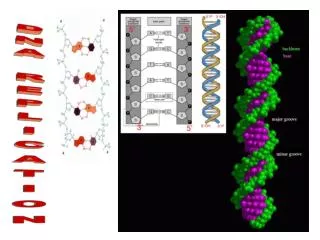
Review of DNA structure • Deoxyribonucleic Acid • Basis for all living things • Makes proteins which make traits eye color, nose shape, heart function. • Made up of repeating units called nucleotides • Nucleotides are made up of: • Phosphate group • 5 Carbon sugar • Sugars and phosphate are held together by a covalent bond. • Nitrogen base • There are 4 nitrogen bases • Adenine Guanine • Thymine Cytosine
Nitrogen Bases • Nitrogen bases pairing together is what makes the double helix shape. • The 4 nitrogen bases are grouped together • Pyrimidines • Cytosine • Thymine • Purines • Adenine • Guanine • Only a purine can pair with a pyrimidine • Adenine – Thymine • Guanine – Cytosine
Complementary Bases • In order to make the double strand the N bases pair up with an existing strand: • What would the complementary strand be for the following DNA sequence: A AA T C G G T A C C A ____________________________________
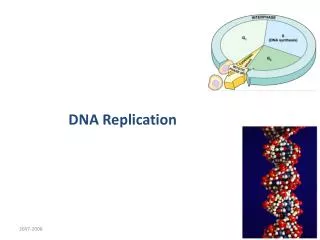
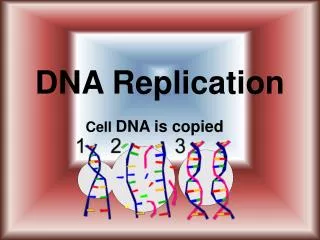
DNA Replication • Occurs during the S phase of interphase • Process by which 2 identical strands of DNA are created.
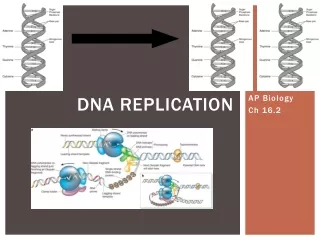
DNA Replication 1. The Double Helix unwinds and unzips by breaking the Hydrogen bonds between the nitrogen bases • An enzyme called DNA Helicase does this. 2. The 2 strands separate and form a replication fork (Place where the new nucleotides will be added.)
DNA Replication cntd. 3. DNA Polymerase adds new nucleotides to the unwound strands (template or parent strands) following the base pairing rules. They’re added in a specific direction. 4. As DNA polymerase moves along the strands, 2 new double helixes are formed 5. Enzymes continue adding nucleotides until it reaches a signal for it to detach
DNA Replication Video • DNA Replication Video