Nervous System
This overview explores the Central and Peripheral Nervous Systems, detailing their structures, functions, and components. The Central Nervous System (CNS) encompasses the brain and spinal cord, responsible for processing sensory information and coordinating voluntary actions. The Peripheral Nervous System (PNS) includes the Autonomic Nervous System and sensory receptors. Key brain parts are explained, such as the cerebrum for voluntary acts, cerebellum for balance, brainstem for information flow, and hypothalamus for regulating bodily functions like hunger and temperature. A brief look at neuron functions and the effects of depressants and stimulants is included.

Nervous System
E N D
Presentation Transcript
NervousSystem By: Jessica Calahorra Adrià Ribas
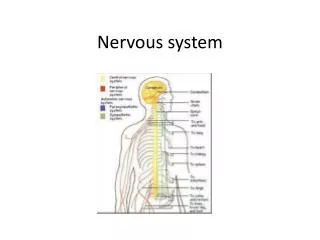
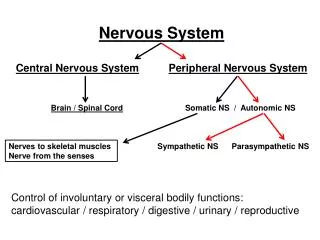
Central NervousSystem • Itconsists of thebrain and spinalcord. • Itsendsout impulses and tellsthebrainthesensesyouperceive.
PeripheralNervousSystem Itisdividedinto: • TheAutonomicNervousSystem • SensoryReceptors • 5 senses
AutonomicNervousSystem Itregulatesourinvoluntaryactionslike: • Digestingfood • Keepingheartbeating
Brain Itisdividedinto 5 parts. • Thecerebrum • Thecerebellum • Thebrainstem • Thethalamus • Thehypothalamus
TheCerebrum • Responsable forvoluntaryacts. • Contains: intelligence, learning, judgment. • Dividedinto: Left and Righthemispheres. • Oneanalytic and theotherartistic.
TheCerebellum • Located at the back of theskull. • It balances actions in themuscles.
TheBrainStem • Itregulatestheflow of informationbetweenbrain and body. • Dividedintothepons and themedullaablangata.
TheThalamus • Receivesmessagesfromthesenseorgans. • Ittransportsthemto a certainpart of thecerebrum.
TheHypothalamus Locatedunderthalamus. Recognizes+ Analyzes: • Hunger • Thirst • Fatigue • Anger • BodyTemperature
SensoryReceptors • PainReceptors • Thermoreceptors • Mechanoreceptors • Chemoreceptors • Photoreceptors
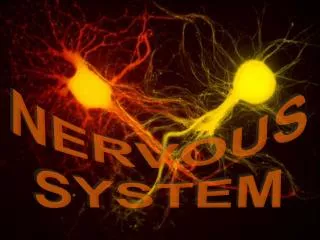
Neuron • Cellsthattransmitelectricalsignalscalled impulses.
Depressants • Slowdownheartrate. • Slowdownbreathingrate. • Lowerbloodpressure. • Relax muscles. • Relieftension.
Stimulants Increase: • Bloodrate • Heartrate • Breathingrate
Vision • Eye: senseorganthatwe use tosense light.
Hearing • Ears: we can distinguishthe pitch of thevibrations in the air.