Understanding Cloud Computing: Benefits, Challenges, and Future Developments
Cloud computing revolutionizes how businesses store and manage data by offering services through the Internet rather than conventional hardware. While it eliminates the need for dedicated IT departments, it also presents challenges such as performance issues and security risks. Sensitive data can be vulnerable, making companies cautious. Private clouds can enhance security and cater to specific needs but come at a high cost. Despite current shortcomings, the future of cloud computing looks promising as advancements continue to develop, driven by user feedback and technological improvements.

Understanding Cloud Computing: Benefits, Challenges, and Future Developments
E N D
Presentation Transcript
CLOUD COMPUTING Michael Gumbleton
Preview • What is the cloud • Internet facts • Drawbacks • Solution • Future • Conclusion
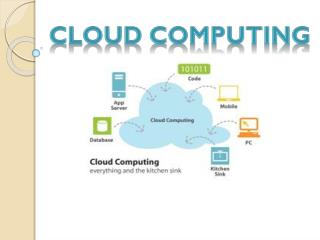
The cloud • Computing via the Internet • Is a service, not a product • No data stored on servers • All virtual • Examples • Google docs • Every email ever sent and received
Internet facts • Each email weighs two ten thousandths of a quadrillionth of an ounce • Internet stores 5 million terabytes (1 million gigabytes) of information • Entire contents of Internet weigh 50 grams
Performance • Lacks in the cloud • Unable to offer what actual computers can • Slows down workers • Expected to improve in the future
Security • Companies insist/rely on high security • Sensitive data at risk • Hacking is made easier
Private Clouds • Companies are able to build own cloud • Catered specifically to their needs • Security, performance, flexibility, etc. increased • Very costly yet very beneficial
Future • Needs time to be developed • Businesses providing feedback • Problems will be fixed • Cost will decrease
Conclusion • Easy way to store data • No need for an IT (Internet Technology) department • Lacks performance/security • Cloud practicality depends on each specific business