Download
1 / 8
90 likes | 264 Vues
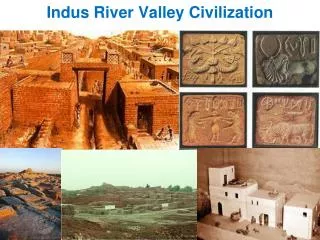
The Indus Civilization, also known as the Harappan civilization, flourished in the Indian subcontinent around 2500 B.C. It is renowned for its planned cities like Kalibangan and Mohenjo-Daro, featuring advanced urban planning, sophisticated drainage systems, and brick houses. Archaeological findings show that agriculture and domestication of animals date back to 7000 B.C. The Indus people demonstrated remarkable adaptability to their environment, with innovations like mud-brick flooring to prevent flooding. This civilization’s achievements astonish us, highlighting our shared human heritage thousands of years later.

E N D
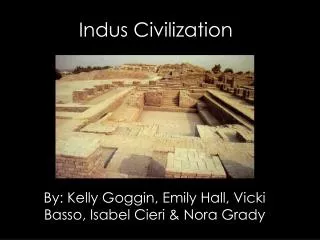
Indus Civilization By: Kelly Goggin, Emily Hall, Vicki Basso, Isabel Cieri & Nora Grady
Overview • The Indus civilization settled in the Indian subcontinent. • The Indus people built India’s first cities around 2,500 B.C. • The Indus Valley civilization is sometimes called the Harappan civilization. • The Indus group astounds us because of our similar ways of life, 4,500 years later.
Earliest Arrivals • Recently, archaeologists discovered evidence in the highlands of agriculture and domesticated sheep and goats dating all the way back to 7,000 B.C. • Around 3,200 B.C. the Indus people were farming in villages alongside the Indus River.
Planned Cities • The Indus people are known for their remarkable establishments of India’s finest cities. • They began building around 2,500 B.C. • The Indus built streets, brick homes and had private baths. • The largest cities they created were: Kalibangan, Mohemjo-Daro and Harappa.
Planned Cities continued… • The Indus people were extremely aware of their surroundings. They made mud-brick floors to prevent flooding. • They built a brick wall approximately three and a half miles long surrounding the area. Inside the wall was a citadel which protected the Royal Family and served as a temple of worship.
Plumbing • The Indus people faced a predicament: how do they obtain clean water from human waste? • They dumped their waste into “drainage” ditches or took the waste outside of town. • The Indus people had a very modern-looking plumbing system. • The Indus civilization was very advanced, no other civilization had this standard of a system until the 19th and 20th centuries.
Works Cited • http://india.mrdonn.org/indus.html • www. Harappan.com • http://www.crystalinks.com/induscivilization.html • http://202.83.164.27/wps/portal/Mot/!ut/p/c0/04_SB8K8xLLM9MSSzPy8xBz9CP0os_hQN68AZ3dnIwML82BTAyNXTz9jE0NfQwNfA_2CbEdFAA2MC_Y!/?PC_7_UFJPCGC20OUQE02ET9FMPJ30O2_WCM_CONTEXT=/wps/wcm/connect/MotCL/ministry/highlights/the+basic+history+of+pakistan • http://ccrtindia.gov.in/induscivilisculp.html • http://sljglobal.wikispaces.com/halimahshantel • http://history-world.org/indus_valley.htm