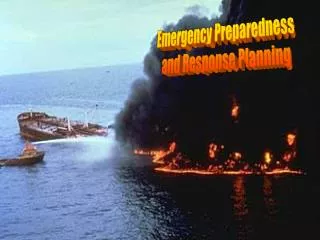
Emergency Preparedness and Response
650 likes | 950 Vues
Emergency Preparedness and Response. Training Outline. Regulatory Requirements Definitions Responsibilities Orientation of Workers Emergency Warden Orientation and Training Requirements for Supervisors Supervising Rescue Operations. Regulatory Requirements. Regulatory Requirements.


Emergency Preparedness and Response
E N D
Presentation Transcript
Training Outline • Regulatory Requirements • Definitions • Responsibilities • Orientation of Workers • Emergency Warden Orientation and Training • Requirements for Supervisors • Supervising Rescue Operations
Regulatory Requirements • Applicable Regulations • Risk assessments done • Written policies and procedures implemented • Emergency exit routes provided and marked • Emergency lighting of workplace and exit routes
Regulatory Requirements • Supervisors must inform workers of risk • Annual emergency drills • Inventory of substances that endanger firefighters/rescuers • Provide emergency wash facilities • Train workers in fire prevention
Regulatory Requirements • Toxic Gases • Provide emergency ventilation • Provide shutdown and containment • Emergency rescue - qualified workers • Personal Protective Equipment • Maintenance of equipment
Regulatory Requirements • Maintain effective communications with rescue and evacuation personnel • Any worker assigned to firefighting to be physically fit and trained annually • Provide rescue for workers entering a confined space
Regulatory Requirements • Written evacuation procedures must include: • Notification of workers about an emergency • Evacuation of all workers • Notification of the fire department • Notification of adjacent workplaces
Definitions • Emergency • A present or imminent event • Requires prompt coordination or special regulation
Definitions • Emergency Supervisory Personnel (Chief Emergency Warden) • Supervises emergency response and rescue operations
Definitions • Emergency Warden • The supervisor or individual who guides workers during an event.
Responsibilities • Employer • Manager • Emergency Coordinator • Supervisor • Emergency Warden • Worker • JHS Committee
Responsibilities - Employer • Ensure: • emergency risk assessments are conducted and documented • emergency evacuation and rescue program is maintained • all facilities have accessible exit routes • exit routes - marked and have emergency lighting as required
Responsibilities – Employer(cont’d) • Ensure: • local emergency response plans are in place • workers are trained in fire prevention, emergency evacuation and rescue • an emergency coordinator is appointed
Responsibilities – Employer(cont’d) • Establish policy to designate emergency wardens’ authority
Responsibilities - Managers • Recruit emergency wardens • Ensure emergency plans posted • Assign responsibilities of other emergency personnel • Ensure emergency evacuation and rescue risk assessments are completed
Responsibilities – Managers(cont’d) • Site specific emergency procedure • Emergency hazard identification and risk assessment • Communication
Responsibilities – Emergency Coordinator • Identify need for emergency response • Review and update risk assessments • Compile and maintain documentation • Secure agreements with outside agencies
Responsibilities – Emergency Coordinator (cont’d) • Designate workers to assist disabled individuals • Ensure evacuation routes and floor plans are available • Template for site specific emergency plans
Responsibilities - Designated Supervisor • Emergency policies, procedures and work arrangements • Understand and follow emergency procedures • Training - fire prevention, emergency evacuation and rescue
Responsibilities - Designated Supervisor (cont’d) • Know emergency emergency response and rescue hazards • Know how to request emergency evacuation and rescue • Be aware of additional resources available
Responsibilities – Emergency Warden • Be familiar with emergency program • Know names of First aid attendants and location of supplies • Assist in new employee emergency orientation
Responsibilities – Emergency Warden (cont’d) • Recruit workers • Wear designated hardhat and high visibility vest • Ensure area is evacuated • Ensure assistants are available to help in evacuation
Responsibilities – Emergency Warden (cont’d) • Ensure that everyone has left the building • Report to Designated Emergency Supervisor on state of evacuation • Prevent re-entry of the building
Responsibilities - Workers • Provide input into risk assessments • Participate in education, training & drills • Follow workplace procedures for emergency evacuation and rescue • Follow instructions of emergency wardens and emergency supervisory personnel
Responsibilities - Joint Health & Safety Committees • Review the effectiveness of drills • Make recommendations on possible corrective actions
Customized Slides Place slides that describe your Program here
Worker Orientation • Evacuation Procedures • Fire Prevention • Use of Fire Extinguishers • Summoning and Reporting First Aid
Worker Orientation (cont’d) • Evacuation Procedures • Emergency Phone Numbers • Purpose of the Plan • Who is in Charge • During an emergency • During an evacuation • First Aid • More Information
Worker Orientation • Evacuation Procedures – continued • Definitions: • Emergency Coordinator • Emergency Supervisor • Emergency Warden • Designated Receptionist • First Aid Attendants
Worker Orientation • Evacuation Procedures - continued • Communications • Alarms • Worker notification • Outside notification
Worker Orientation • Evacuation Procedures – continued • Securing Equipment • Turn off computers • Secure laptops • Secure cash drawers • Shut off kitchen appliances • Close doors to record vaults • Close but do not lock doors
Worker Orientation • Evacuation Procedures • Evacuation routes and emergency exits • Assembly Areas (Muster Stations) • Evacuation Roles and Responsibilities • Designated Receptionist • Line Managers and Supervisors • Emergency Wardens
Worker Orientation • Fire Prevention • Trash and litter • Keep the workplace areas neat and clean • Fire alarm pull stations and extinguishers • Know how to use fire extinguishers
Worker Orientation • Fire Prevention - continued • Check extinguishers in your area • Store hazardous materials in designated areas • Keep exits free of obstructions
Worker Orientation • Fire Prevention - continued • Smoke only where permitted • Keep equipment clean and use it properly • Handle flammable liquids with caution • Know location of emergency exits and procedures
Worker Orientation • Use of Fire Extinguishers • Dry chemical extinguishers • Foam extinguishers • Carbon dioxide extinguishers • Water extinguishers
Worker Orientation • Summoning and Reporting to First Aid • Revise this slide to agree with your Program
Emergency Warden Orientation • General Evacuation • Activate fire alarm • Put on hard hat, high visibility vest • Get work site register for roll call
Emergency Warden Orientation • Check evacuation route(s) • Put hand on exit door to feel for heat • Look and smell for smoke
Emergency Warden Orientation • Provide evacuation instructions • Ensure disabled staff get to areas of refuge • Ensure everyone gets out
Emergency Warden Orientation • Ensure all doors are closed • Place “all clear” tag on doors • Leave the building • Complete roll call • Report to designated person • Report anyone missing
Special Responses • Spill Response • Complete this overhead once your Program is ready
Special Responses • Earthquake Response • Complete this overhead once your Program is ready