Bridging the Standardization Gap: Innovations for Developing Countries
This presentation from the WTSA-12 event in Dubai addresses the critical issue of the standardization gap faced by developing countries within the ICT sector. Ramy Ahmed, Chair of the ITU-T Focus Group on Innovation, discusses the implications of inadequate participation in standardization efforts and identifies key strategies for enhancing effective participation. By fostering innovation, establishing regional study groups, and providing necessary resources, we can empower developing nations to actively engage in the standards development process and contribute meaningfully to the global ICT landscape.

Bridging the Standardization Gap: Innovations for Developing Countries
E N D
Presentation Transcript
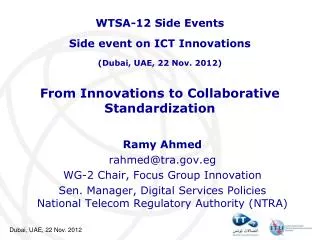
WTSA-12 Side Events Side event on ICT Innovations (Dubai, UAE, 22 Nov. 2012) From Innovations to Collaborative Standardization Ramy Ahmed rahmed@tra.gov.eg WG-2 Chair, Focus Group Innovation Sen. Manager, Digital Services PoliciesNational Telecom Regulatory Authority (NTRA)
Bridging the Standardization Gap one of the major strategic goals of the ITU Telecommunication Standardization Sector (ITU-T) Has a lot of implication on developing countries
The Magnitude of the Problem • How can we assess the magnitude of the gap? • Level of Participation ITU Meetings • Number of Standalone Contributions • Number of Addendums and modifications to existing contributions • But…. is this enough? If these indicators increases Standardization Gap is Bridged?
The Magnitude of the Problem • Concept of Effective Participation • Contributions that reflects the true interests and concerns of developing countries • Participation in the standards development process with proper competences that would enable them from submitting proposals, and defending them, and possibly obtaining consensus
Towards Effective Participation in Standardization Process Fellowships? Government Policies? Funds? Effective Participation
Innovation Life-Cycle Gap will always increase !!
Remedies Innovation is the key principle that forms the way out of the gap for the developing countries ITU should support currently established regional study groups and encourage the establishment of new regional groups