Understanding Reef-Building Corals: The Foundation of Marine Ecosystems
Coral reefs are formed by millions of coral polyps that extract calcium and carbonate from seawater, creating hard skeletons. As polyps reproduce, new generations build upon the remnants of their ancestors, resulting in large coral structures that can evolve into islands, like the Florida Keys. These corals depend on symbiotic algae for photosynthesis, which provides them with essential nutrients. Growing only in warm, shallow waters, reef-building corals face threats from disease, pollution, and climate change. Their preservation is crucial for marine biodiversity and coastal protection.

Understanding Reef-Building Corals: The Foundation of Marine Ecosystems
E N D
Presentation Transcript
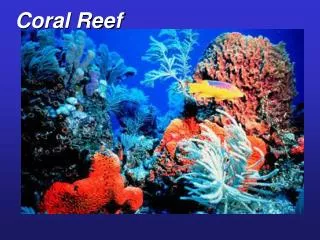
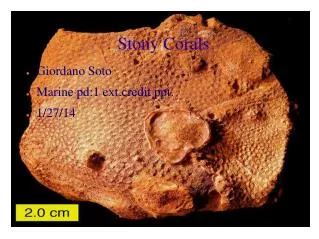
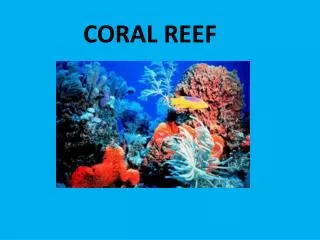
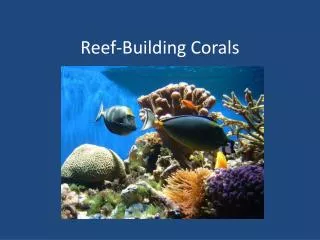
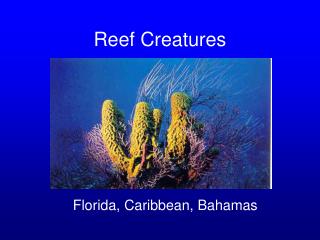
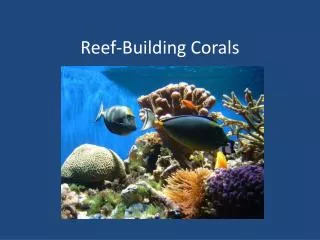
Reef-Building Corals • Coral reefs are produced by millions of coral polyps, each removing calcium and carbonate from sea water and depositing it as a hard skeleton.
Reef-Building Corals • As one generation of polyps reproduces, the new polyps build their skeleton on the foundation of the old.
Reef-Building Corals • This cycle has resulted in the build-up of coral into huge reefs -- and some have actually become islands over time (for example, the Florida Keys).
Reef-Building Corals • All reef-building corals possess algae within their tissues. The algae photosynthesize, utilizing the waste products of the coral (carbon dioxide, nitrogen, and phosphorus). Coral Bleaching
Reef-Building Corals • In turn, the coral use the food and oxygen produced by the algae during photosynthesis. Without the algae, the corals would not have the ability to secrete the massive stony skeleton we call the reef.
Reef-Building Corals • Since the algae need light for photosynthesis, reef-building corals grow only in ocean water less than 300 feet deep. The corals need warm water (above 70°F) and do not tolerate low salinity or murky water.
Reef-Building Corals • The only place in the continental United States suitable for coral reef formation is around the Florida Keys, where there is warm, clear water from the Gulf Stream. Coral Reefs
What coral reefs do for us: • Provide shelter for marine life • Provide humans with recreation • Potential source of medicines • Create sand for beaches • Buffer shorelines from storms; coastal protection • Fisheries, sea food
What we do to coral reefs: • Coastal development; deforestation • Disease • Overfishing & destructive fishing • Pollution from agriculture • Sewage • Global warming NOAA Research Reef Revival
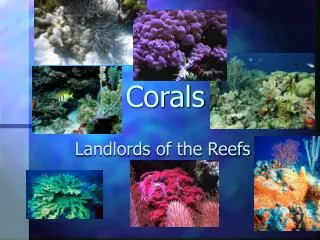
Coral Reefs • Extremely diverse. • Multiple species live within coral reefs.
https://www.youtube.com/watch?v=wbNeIn3vVKM • https://www.youtube.com/watch?v=ctqvqES1PE8