Exploring Figurative Language and Sound Devices in Poetry
In this lesson, students will engage with two powerful poems: "Dreams" by Langston Hughes and "Ice" by William Oliver, focusing on the use of figurative language and sound devices. We will analyze the metaphors and themes within these works, encouraging students to identify examples and discuss their meanings. Students will practice reading poetry and understanding its rules while actively participating in group discussions and activities. Through this exploration, they will gain a deeper appreciation for the artistic techniques that enhance poetic expression.

Exploring Figurative Language and Sound Devices in Poetry
E N D
Presentation Transcript
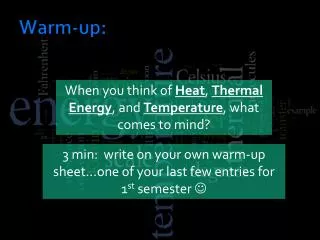
Warm-up (7 min.) Please answer the following question. Be sure to use complete sentences and write one paragraph. What makes life worth living? HW: BRING textbooks daily! HW: BRING TEXTBOOKS
English 2P Agenda: Objectives: HW: BRING TEXTBOOKS Warm-up Read p.223 Interactive R. “Dreams” by Hughes p.224 “Ice” by Oliver p. 225 TOD: Sound Devices Students will be able to: Identify the figurative language and sound devices by citing examples.
Figurative Language (p. 223 in I.R.) • Define figurative language • Don’t take it seriously! • Ex: “Go break a leg” • OTS = hurt yourself • UTS = good luck! Poetry is UTS! • Reading Poetry Rules • Assign groups rules #1-7. • Share: one person reads rule, other person explains it. • Practice the rules: “Dreams” poem (p.224)
“Dreams” by Langston Hughes(p.224 in I.R.) How many stanzas? lines? Identify the metaphor(stanza 1): Explain why (UTS) don’t mention a bird! Identify the metaphor(stanza 2): Explain why (UTS) don’t mention snow or ground!
Message? What theme do you think the poem conveys? The poem (conveys/communicates/describes) the theme that _____________________ because in the poem Hughes states: “_____________________”(l. #) or (ll. #-#).
“Ice” poem (p. 225) Assign stanzas 1-21 to 21 students. Read once Teacher read 2nd time Margin Questions: (p. 225): Identify, Figurative Lang. (p. 226): Figurative Lang., Infer
Discuss Sound Devices Chart (p.229) Purpose of sound devices? Need help with the terms/ sound devices? Which sound devices are presented in “Dreams” (p. 224)
Ticket out the door (“Dreams”) Sound devices are used to ______(p.229). Some types of sound devices include: • end rhyme (“Dreams” ll. 2+4) “die/fly” • Use a different example for end rhyme! • repetition (ll. #+#) • alliteration (l. #) * Extra points: Any sound device in “Ice”
“Ice” Summary In the poem titled “_____________,” the poet, ________________ uses figurative language to (convey/communicate/describe ) ______________________________________ _______________________________________. It helps the reader (understand/experience/ learn) _____________________.