Impacts of Distributed Generation on Underfrequency Protection Systems
This document discusses the implications of distributed generation on underfrequency protection systems, focusing on machine specifications and resonances that occur at various frequency ranges. It examines the nominal system frequency of 60 Hz, potential deviations during large contingencies, and extreme conditions. The thresholds for underfrequency load shedding (UFLS) are outlined, detailing the first and second steps at 59.300 Hz and 58.800 Hz, respectively. The document highlights key concerns for system operators and the importance of understanding these impacts to maintain system reliability.

Impacts of Distributed Generation on Underfrequency Protection Systems
E N D
Presentation Transcript
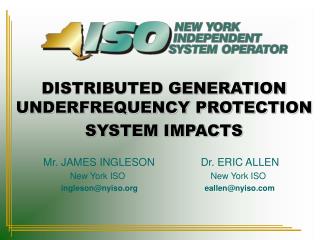
DISTRIBUTED GENERATION UNDERFREQUENCY PROTECTION SYSTEM IMPACTS Mr. JAMES INGLESON Dr. ERIC ALLEN New York ISO New York ISO ingleson@nyiso.org eallen@nyiso.com
INTERCONNECTION FREQUENCY RANGE • Nominal System Frequency: 60.000 Hertz • Possible Deviation for Large Contingency: 59.950 Hertz • Extreme Deviation: 59.900 Hertz • First Step UFLS: 59.300 Hertz • Second Step UFLS: 58.800 Hertz • Machine Resonances begin to appear: -58.000 Hertz
INTERCONNECTION FREQUENCY RANGE • Nominal System Frequency: 60.000 Hertz • Possible Deviation for Large Contingency: 59.950 Hertz • Extreme Deviation: 59.900 Hertz • First Step UFLS: 59.300 Hertz • Second Step UFLS: 58.800 Hertz • Machine Resonances begin to appear: -58.000 Hertz
DISTRIBUTED GENERATION UNDERFREQUENCY PROTECTION SYSTEM IMPACTS Mr. JAMES INGLESON Dr. ERIC ALLEN New York ISO New York ISO ingleson@nyiso.org eallen@nyiso.com