Reforming Society: Education, Prisons, and Temperance Movements in 19th Century America
50 likes | 168 Vues
This overview explores significant reforms in 19th-century America, focusing on education, prison conditions, and the temperance movement. Key figures like Horace Mann championed public schooling, while Dorothea Dix advocated for humane treatment of the mentally ill in prisons. The temperance movement sought to combat alcohol abuse, emphasizing its detrimental effects on families. With women's pivotal roles in the education sector and legislative changes like the "Maine Law," these reforms aimed to improve societal wellbeing and create a more just and educated populace.


Reforming Society: Education, Prisons, and Temperance Movements in 19th Century America
E N D
Presentation Transcript
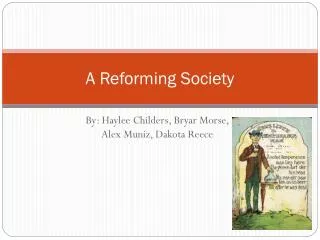
A Reforming Society By: Haylee Childers, Bryar Morse, Alex Muniz, Dakota Reece
Education • Most children had been taught by their parents. • The American Spelling Book was the most popular school book. • Public school movement wanted a system of tax-supported public schools • Women played key roles by becoming teachers • Emma Willard established schools for women in CT, OH, and NY. • Horace Mann was one of the greatest school reformers. • Championed the creation of a state board of education.
Dorothea Dix • Spent two years visiting every prison. • Discovered people suffering from mental issues were housed with hardened criminals. • Began teaching Sunday school in MA prison. • Encouraged other communities to build humane hospitals.
Prison Reform • Sometimes called the penitentiary movement. • Aims to change prison system. • Change living conditions. • Cleaner cells • Baths • Better food
The Temperance Movement • An effort to end alcohol abuse. • Made posters warning that they were wasting money on liquor. • Neal Dow created “Maine Law” which restricted the sale of alcohol. • Men spend money on beer then food for their families. • Took place in late 19th- early 20th century.