Understanding the Cormorant: Characteristics, Habitat, and Behavior
120 likes | 240 Vues
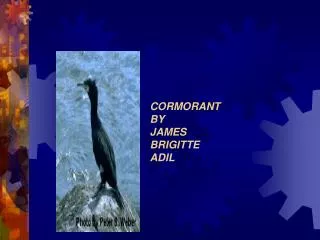
The Cormorant is a large, dark waterbird with a striking 27-inch length and a wingspan of 50 inches. It features a long, hooked bill, a slender neck, and dark plumage, with small white plumes appearing on its head during breeding. Preferring marine and inland waters across North America, it feeds primarily on fish and amphibians. While fishermen view it as a nuisance due to its impact on aquaculture, the Cormorant is protected by law in places like Nova Scotia. Discover its unique nesting habits and role in the ecosystem.


Understanding the Cormorant: Characteristics, Habitat, and Behavior
E N D
Presentation Transcript
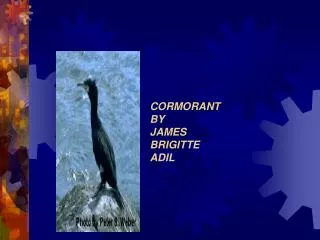
Length 27 inches wingspan : 50 inches Sexes similarLarge, dark waterbird with a long, hooked bill and long tail.Long thin neck
Pale throat and chest darkening Pale underneathBrownish back and upperwingsLooks like birds crow-duck, shag, water turkey.
Entirely black plumageSmall white plumes on head during breedingLoons are similar on the water Separable by the shape and color of the gular areas
Habitat- North America Preference of Environment-Marine and inland waters
BehaviorFeeds during the day, swimming and diving for fish.Perches with its wings outspread.Made its nest on twigs
DietFish, crustaceous and amphibians from fresh water and catch prey underwater.
EnemiesFishermen.Protected throughout the year by provincial statue in Nova Scotia.
Relationship with peopleSome people consider it like a bad bird, extensive damage to aquaculture facilities and ornamental fish.Disturb fish breeding, contribute to the spread of diseases and parasites.
SOURCES • http://www.mbr-pwrc.usgs.gov/id/framlst/i1200id.html • http://museum.gov.ns.ca/mnh/nature/nsbirds/bns0028.htm • http://animaldiversity.ummz.umich.edu/accounts/phalacrocorax/p._auritus$narrative.html