
Understanding River Systems: Erosion, Deposition, and Human Impact
This text explores river systems, focusing on essential processes such as erosion and deposition and their effects on the environment. It highlights factors like longshore drift and tributary interactions, illustrating how human activities, including urbanization and exploitation of resources, influence these natural systems. Key examples demonstrate the impact of climate change on river behavior and the social implications of migration in relation to urban settlements. Understanding these dynamics is crucial for effective environmental and community planning.

Understanding River Systems: Erosion, Deposition, and Human Impact
E N D
Presentation Transcript
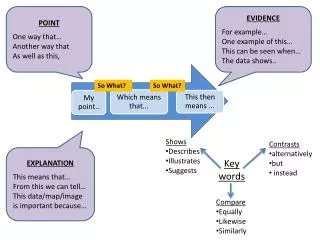
POINT • One way that… • Another way that • As well as this, • EVIDENCE • For example… • One example of this… • This can be seen when… • The data shows.. So What? So What? • Shows • Describes • Illustrates • Suggests • Contrasts • alternatively • but • instead • EXPLANATION • This means that… • From this we can tell… • This data/map/image is important because… Key words • Compare • Equally • Likewise • Similarly
Arch Cave Coordinate Fieldsketch Stack Coasts Backwash Compass Distance Longshore drift Swash Map Skills Direction Latitude Groyne Symbol Erosion Depostition Longitude Contour Poverty Manufacturing Transportation Deposition Sport Exploited Location YEAR 7 Rivers Saturated Erosion primary Channel Meander Social Secondary Source Confluence Tertiary economic Tributary Mouth Rural Urban Citizen Weather Brazil Migration UK Environment EU Climate Favela Population Settlement Multicultural Poverty Slum Migration