Understanding Schizophrenia: Symptoms, Types, Treatment, and Social Influence
Schizophrenia is a complex mental disorder characterized by a broad spectrum of cognitive and emotional dysfunctions, including hallucinations, delusions, disorganized speech, and inappropriate emotions. Affecting approximately 1 in 100 people, complete recovery is rare and the economic costs were estimated at $65 billion in 1991. This guide explores the history of schizophrenia, its symptoms categorized into positive, negative, and disorganized types, various subtypes, neurological and genetic influences, and treatment options available, including medication and psychosocial interventions.

Understanding Schizophrenia: Symptoms, Types, Treatment, and Social Influence
E N D
Presentation Transcript
Schizophrenia Chapter 12
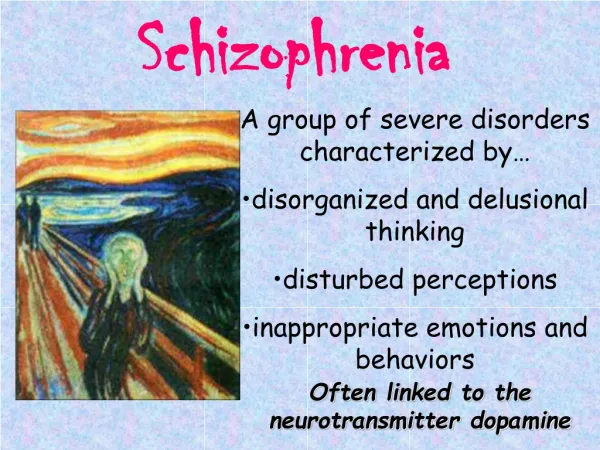
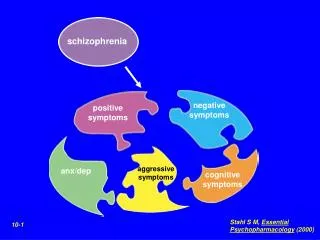
Schizophrenia • Broad spectrum of cognitive and emotional dysfunctions that include • Hallucinations • Delusions • Disorganized speech and behavior • Inappropriate emotions
Affects about 1 in 100 • Complete recovery is rare • Costs in 1991 estimated at $65 billion
Early figures • Emil Kraepelin • Dementia praecox • Distinguished this from manic-depressive illness by emphasizing onset and outcome • Eugen Bleuler • Schizophrenia. “split mind” • “Breaking of associative threads” • Recognized inability to keep constant stream of thought
Symptoms of heterogeneous: not all people with schizophrenia share the same symptoms • Psychotic: delusions or hallucinations • Person can display psychosis without having schizophrenia
Positive symptoms • Active manifestations of abnormal behavior or an excess or distortion of normal behavior • Delusions • Delusions of grandeur • Delusions of persecution
Positive symptoms… • Hallucinations • The experience of sensory events without input from the environment • Auditory hallucinations are the most common • Broca’s area (speech) active not Wernicke’s area (language comprehension)
Negative symptoms • Absence or insufficiency of normal behavior • Social withdrawal • Apathy • Impoverished speech or thought • Avoliton: apathy • Alogia: poverty of speech
Negative symptoms • Anhedonia: lack of pleasure • Flat affect: lack of emotional expression
Disorganized symptoms • Rambling speech, erratic behavior, inappropriate affect • Disorganized speech • Cognitive slippage • Tangentiality • Loose associations
Disorganized symptoms…. • Inappropriate affect • Laughing or crying at inappropriate times • Disorganized behavior • Catatonia
Subtypes of Schizophrenia • Paranoid • Disorganized • Catatonic • Undifferentiated • residual
Paranoid Schizophrenia • Hallucinations and delusions • Relatively intact cognitive skills and affect • Generally do not have disorganized speech • Best prognosis • Delusions of grandeur and persecution
Disorganized type (hebephrenia) • Marked disruptions in speech and behavior • Flat or inappropriate affect • Delusions tend to be fragmented • Shows up early and tends to be chronic
Catatonic type • Unusual motor responses and odd mannerism • Echolalia • Echopraxia: relatively rare
Undifferentiated type • “catch all” category • Some symptoms but do not meet full criteria for paranoid, disorganized or catatonic types
Residual type • At least one episode but no longer displaying major symptoms. • Often have residual symptoms • Negative beliefs • Unusual or bizarre ideas • Social withdrawal • Flat affect
Other psychotic disorders • Schizophreniformn disorder • Schizoaffective disorder • Delusional disorder • Brief psychotic disorder • Shared psychotic disorder • Schizotypal personality disorder
Developmental research • Early brain damage? • Brain plasticity • Compensation in early life more difficult as person gets older
Genetic influence • More severe the parent’s schizophrenia greater likelihood child will develop schizophrenia • Genetic relatedness increases chances • Monozygotic twins: 48% • Fraternal: 17% • Genes predispose person to schizophrenia • Smooth movement eye tracking: genetic marker?
Neurological considerations • Dopamine • Excess can cause psychotic symptoms • Antipsychotic drugs block dopamine receptors • Negative effects of drugs similar to Parkinson's disease
Neurological considerations..dopamine • BUT • Many with schizophrenia not helped by dopamine antagonists • Dopamine blocked quickly, but symptoms remit long after • More likely a dopamine/serotonin interaction • Virus?
Neurological damage….. • Positive symptoms: dopamine? • Negative symptoms: enlarged ventricles? • Can have these abnormalities w/o schizophrenia • Less activity in frontal lobes, particularly dopamine pathway • Finger tip ridge count: in 1/3 of of discordant twins
Psychological and social influences • Extreme stress can produce psychotic symptoms • May activate predisposition • Family interactions: • Schizophrenogenic mother and double bind largely discounted • Expressed emotion related to relapse • Criticism, hostility and emotional over-involvement
Treatment • Institutionalization • Prefrontal lobotomy • ECT • Insulin therapy • Neuroleptic drugs • Conventional drugs : unpleasant side effects • Atypical antipsychotics
New treatment? • Transcranial magnetic stimulation
Psychosocial interventions • Behavioral approaches • Socialization • Self-care • Appropriate emotional responses • Token economies • Independent living skills • Behavioral family therapy • Vocational rehabilitation
Cultural factors • Differences in family support (Hispanics) • China: meds and hospitalization • Africa: prisons
prevention • Genetic markers • Early intervention