
Coordinates: How to Read and Use x and y Values

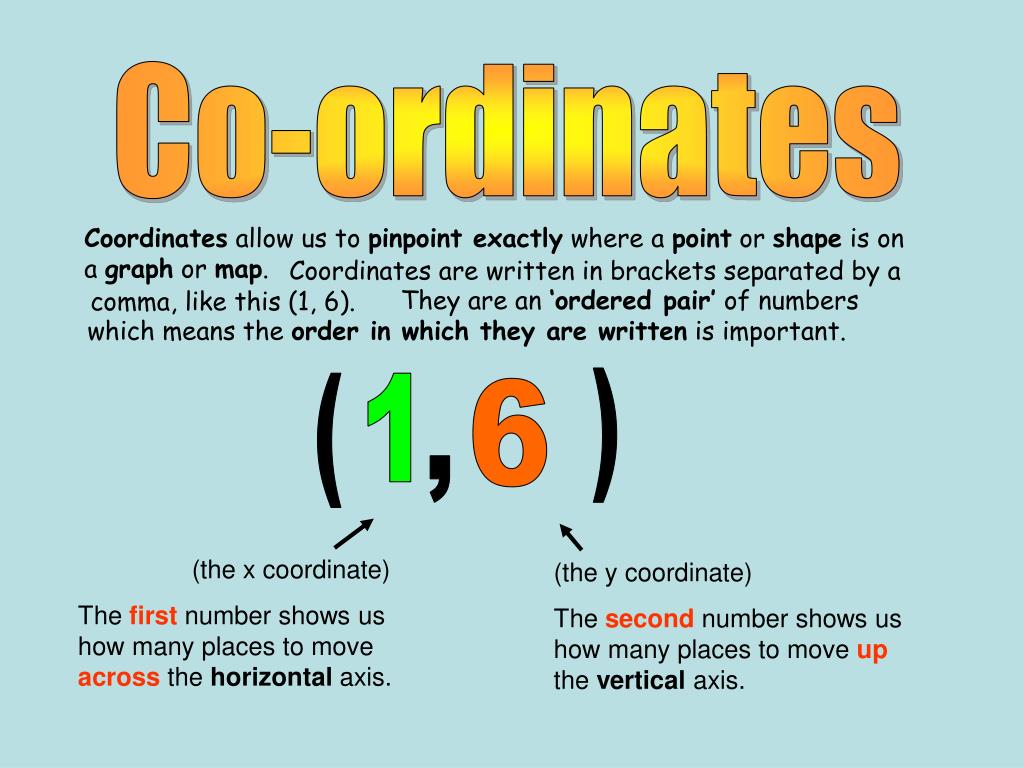
Coordinates used to locate points on a graph or map. Coordinates are presented as ordered pairs of numbers, with the first number indicating movement along the horizontal axis (x-coordinate) and the second indicating movement along the vertical axis (y-coordinate). Example coordinates, such as (1, 6) and (3, 5), demonstrate how to pinpoint locations accurately. Remember: to read coordinates, move across the x-axis first and then up the y-axis. Practice using coordinates with the provided examples.
Télécharger la présentation 
Politique de téléchargement : le contenu du site vous est fourni TEL QUEL pour votre information et votre usage personnel ; il ne peut être vendu, concédé sous licence ni partagé sur d’autres sites sans l’accord de son auteur.Le contenu vous est fourni TEL QUEL, pour votre information et votre usage personnel uniquement. Téléchargez la présentation en cliquant sur ce lien. Lors du téléchargement, si vous ne parvenez pas à télécharger une présentation, l’éditeur a peut-être supprimé le fichier de son serveur.Pendant le téléchargement, si vous ne parvenez pas à obtenir une présentation, le fichier a peut-être été supprimé par l’éditeur.
F I N