1 / 10

What Is a Rotavator?

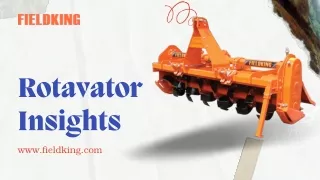
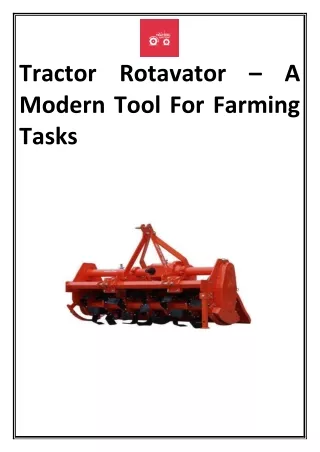
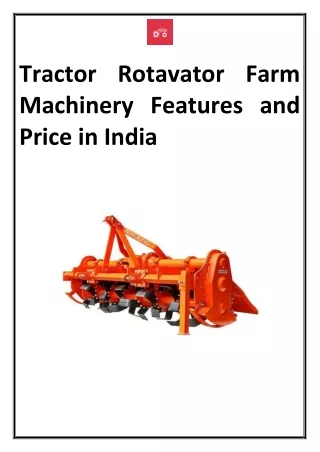
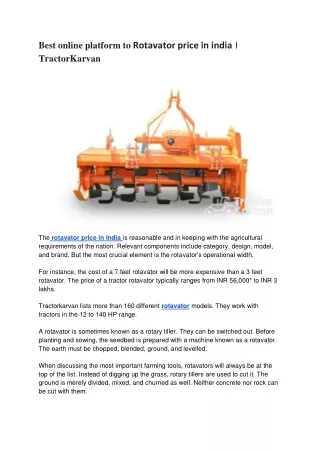
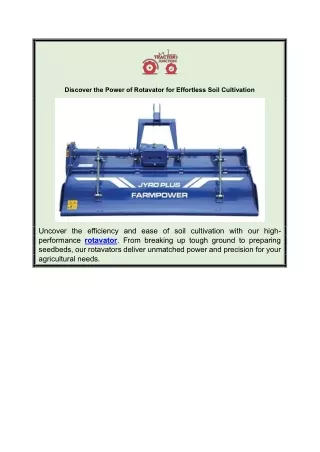
A rotavator is a tractor-mounted implement equipped with rotating blades or tines. These blades churn and till the soil, breaking up clumps and ensuring a fine, aerated seedbed. Unlike traditional ploughs, rotavators work by slicing and turning the soil, making them ideal for both primary and secondary tillage operations.<br>For more details about this product, visit our website: https://www.fieldking.com/product-portfolio/rotary-tiller/

mahira9
Télécharger la présentation

What Is a Rotavator?

An Image/Link below is provided (as is) to download presentation Download Policy: Content on the Website is provided to you AS IS for your information and personal use and may not be sold / licensed / shared on other websites without getting consent from its author. Content is provided to you AS IS for your information and personal use only. Download presentation by click this link. While downloading, if for some reason you are not able to download a presentation, the publisher may have deleted the file from their server. During download, if you can't get a presentation, the file might be deleted by the publisher.

E N D

Presentation Transcript


  1. Rotavator Fieldking

  2. What Is a Rotavator? A Rotavator, also known as a rotary tiller, is a tractor-driven implement used for preparing the seedbed by breaking up and pulverizing the soil. It uses a set of rotating blades or tines powered by the tractor’s PTO (Power Take-Off) shaft to dig into the soil and create a fine tilth suitable for sowing seeds. Unlike traditional ploughs or cultivators, a rotavator performs multiple operations simultaneously — such as ploughing, harrowing, and leveling. This makes it a versatile machine for both dry and wet land cultivation.

  3. How Does a Rotavator Work? The rotavator is connected to the tractor through a three-point linkage system. The power from the tractor’s PTO shaft rotates the blades of the rotavator. As these blades spin, they cut through the soil, breaking clods into smaller particles. The machine’s depth and speed can be adjusted based on the type of soil and the crop requirements.

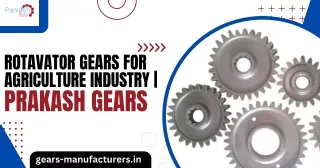
  4. Key components of a rotavator include • Gearbox: Transmits power from the tractor to the rotor shaft. • Blades: The rotating tines that dig into the soil. • Rotor Shaft: Holds the blades and enables rotation. • Frame: Provides structure and strength to the implement. • Depth Skids: Control the working depth of the blades.

  5. Benefits of Using a Rotavator The rotavator offers several advantages that make it a preferred choice among modern farmers. 1. Time and Labor Efficiency A rotavator can prepare the field in one go, reducing the need for multiple implements. This saves both time and labor costs, allowing farmers to cover larger areas faster. 2. Better Soil Aeration The rotary blades mix and turn the soil thoroughly, improving aeration. Properly aerated soil enhances root growth and water absorption, resulting in better crop yield. 3. Enhanced Soil Fertility By mixing organic matter like crop residues into the soil, a rotavator improves soil fertility naturally. It promotes microbial activity and nutrient recycling.

  6. Applications of Rotavators in Modern Farming • Rotavators play a crucial role in various stages of crop cultivation. Some common applications include: • Seedbed Preparation: Helps create a smooth and leveled surface for uniform seed germination. • Residue Management: Incorporates crop residues like paddy straw into the soil, reducing the need for burning. • Weed Control: The blades uproot weeds effectively, minimizing the need for chemical weed killers.

  7. Conclusion A Rotavator is much more than just a soil preparation tool—it’s a symbol of modern, efficient, and sustainable farming. By saving time, improving soil quality, and reducing operational costs, it empowers farmers to achieve higher yields with less effort. With the growing demand for advanced agricultural solutions, rotavators have become a necessity rather than a luxury. Investing in a high-quality rotavator—like those offered by Fieldking can transform your farming experience and help you cultivate success season after season.

  8. Address DGL 234, 2nd Floor The Galleria, Mayur Vihar,Phase-1, Delhi,India Ph: +91 11 48042089 E-mail: exports@fieldking.com Website: www.fieldking.com

  9. Thank You

More Related