Best Practices for Conservation Tillage and Zero Tillage Systems
80 likes | 221 Vues
This guide outlines effective Best Management Practices (BMPs) for Conservation Tillage (CT) and Zero Tillage (ZT) systems. Key strategies include maintaining soil cover with mulch, dividing land into small plots (1/4 to ½ acre), and utilizing diverse cropping sequences. It's essential to optimize the duration of off-season covered (green) fallow periods. Additionally, each field plot should be subdivided into permanent zones, featuring grow zones for cash crops, alleyways for movement, and farmscapes with flowering plants to attract beneficial insects.


Best Practices for Conservation Tillage and Zero Tillage Systems
E N D
Presentation Transcript
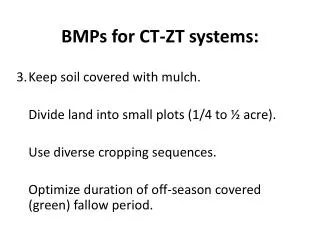
BMPs for CT-ZT systems: 3. Keep soil covered with mulch. Divide land into small plots (1/4 to ½ acre). Use diverse cropping sequences. Optimize duration of off-season covered (green) fallow period.
BMPs for CT-ZT systems: 4. Sub-divide each field plot into permanent zones. Grow zone—flat or raised beds where cash crops are grown Alleyway—walkway between grow zones Farmscape—flowering plants (biostrips) established to attract beneficial insects