
Enhancing Social-Emotional Development Through Mentor Relationships in Family Contexts

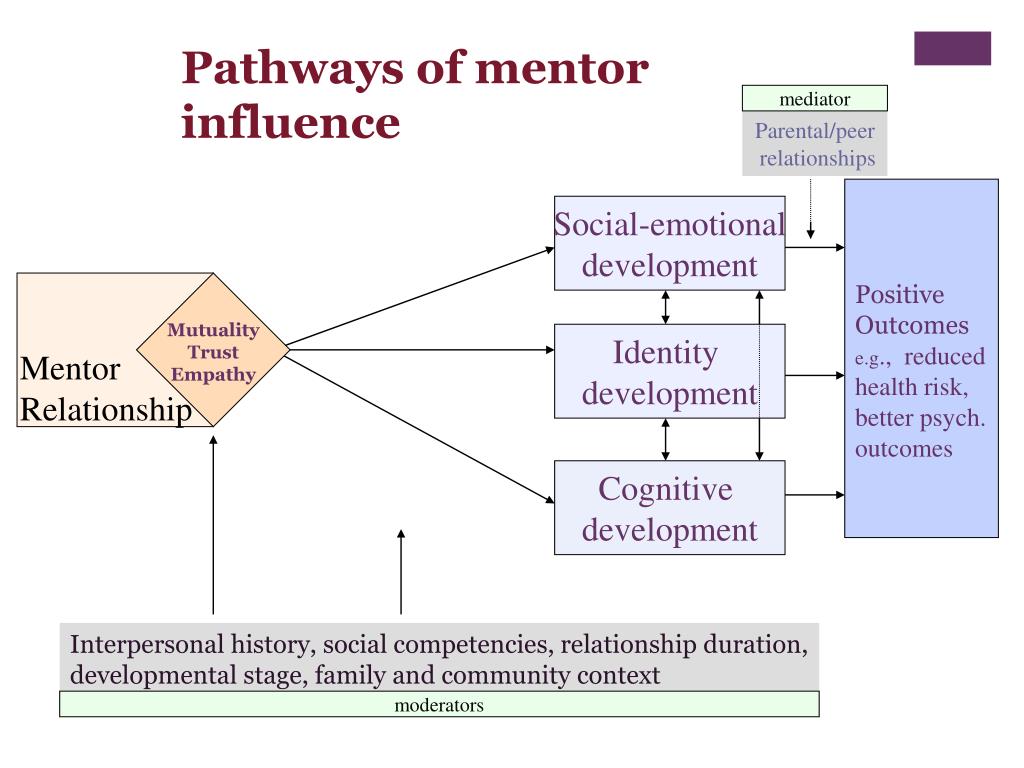
This study explores the positive outcomes of parental and peer relationships on social-emotional development, focusing on mentoring's role. It highlights how mentorship influences identity and cognitive development, enhances interpersonal skills, and promotes mutual trust and empathy. Factors such as relationship duration, developmental stages, and family and community contexts are examined as moderators of mentor influence pathways. By identifying these dynamics, this work aims to illuminate ways to foster healthier relationships, ultimately reducing health risks and improving psychological outcomes for youth.
Télécharger la présentation 
Politique de téléchargement : le contenu du site vous est fourni TEL QUEL pour votre information et votre usage personnel ; il ne peut être vendu, concédé sous licence ni partagé sur d’autres sites sans l’accord de son auteur.Le contenu vous est fourni TEL QUEL, pour votre information et votre usage personnel uniquement. Téléchargez la présentation en cliquant sur ce lien. Lors du téléchargement, si vous ne parvenez pas à télécharger une présentation, l’éditeur a peut-être supprimé le fichier de son serveur.Pendant le téléchargement, si vous ne parvenez pas à obtenir une présentation, le fichier a peut-être été supprimé par l’éditeur.
F I N