American Transcendentalism
40 likes | 167 Vues
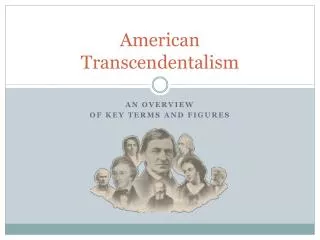
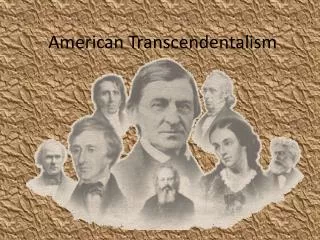
American Transcendentalism emerged in the early 19th century, promoting the belief that the individual is the spiritual center of the universe. Key figures like Ralph Waldo Emerson, Henry David Thoreau, and Margaret Fuller, along with influential contemporaries such as Bronson Alcott and Louisa May Alcott, championed self-reliance and intuition. Central ideas include the notion that nature is a living mystery filled with symbolic meaning and that personal virtue and happiness stem from self-realization. This philosophical movement encourages a conscious union between the individual psyche and the universal spirit.


American Transcendentalism
E N D
Presentation Transcript
Transcendentalist Authors • The Big Three: • Emerson • Thoreau • Fuller • Others: • Bronson Alcott, Louisa May Alcott, William Ellery Channing, Sophia Peabody-Hawthorne, et. al
Basic Premises: • individual is the spiritual center of the universe • structure of the universe literally duplicates the structure of the individual self • acceptance of neo-Platonic conception of nature as living mystery, full of signs - nature is symbolic • individual virtue and happiness depend upon self-realization
Basic Assumptions • “The intuitive faculty, instead of the rational or sensical, became the means for a conscious union of the individual psyche (known in Sanskrit as Atman) with the world psyche also known as the Oversoul, life-force, prime mover and God (known in Sanskrit as Brahma).”