Lessons from Weeds
Explore the surprising value of weeds, non-native opportunistic plants that thrive in disturbed environments. This insightful examination highlights their role as indicators of soil conditions and environmental health. Weeds can reduce soil erosion, enhance soil quality through nitrogen fixing, provide food and habitat for beneficial insects, and serve potential sources of food and medicine. Understanding these plants fosters ethical foraging practices while offering a fresh perspective on biodiversity and ecological balance.

Lessons from Weeds
E N D
Presentation Transcript
Lessons from Weeds A close look at non-native opportunistic plants
“Why do people want to kill plants that want to grow and grow plants that want to die?”
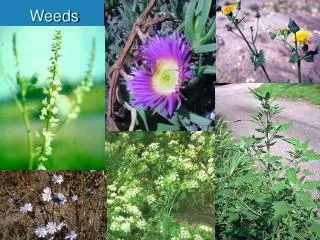
Weeds? • Non-natives • Hard working & opportunistic • Indicators of soil or environmental conditions • pH, N – P – K, water, compaction
Pros and Cons? • Negative contributions • Positive contributions
Contributions of hard working plants • Reduce soil erosion • Mitigate soil compaction • Improve soil (N fixing, biodynamic accumulation) • Food source and habitat for beneficial insects • Potential source of food and medicine • Indicator of soil conditions
Classification review • Broadleaf (dicots) • Grasses (monocots) • “control” • Cultural (change the environment) • Physical (get down there and pull) • Biological (invasivores?) • Chemical (the last resort)
Being an “invasivore” • Positive identification • Understanding of growing conditions • Free access • Ethical foraging (rule of 3)
Stellaria media Chickweed - Broadleaf INDICATORS: - High N - If stunted, low P, moisture LIKELY SITES: - Shady - Fertilized CONTRIBUTION: - Food - Medicine B, P
Sonchusasper Sow Thistle - Asteraceae INDICATORS: - High N - neutral pH LIKELY SITES: - Disturbed - Fertilized CONTRIBUTION: - Food, forage
Taraxacumofficinale Dandelion - Asteraceae INDICATORS: - Moisture - Acidic soil LIKELY SITES: - Disturbed - Fertilized CONTRIBUTION: Food, Medicine, Insectiary
Conium maculatum Poison Hemlock - Apiaceae INDICATORS: - Herbicide application LIKELY SITES: - Disturbed - Fertilized CONTRIBUTION: Insectiary, Poison
Seneciovulgaris Groundsel - Asteraceae INDICATORS: - High fertility LIKELY SITES: - Cultivated CONTRIBUTION: Medicinal, wildlife food and habitat. 1 plant = 25,000+ seeds Mechanical
Cyperusesculentus Nutsedge, Tigernut - Cyperaeceae - Grass (monocot) INDICATORS: - Wet soil, poor drainage - acid pH LIKELY SITES: - Overwatered - Neglected CONTRIBUTION: Nutritional tuber, medicinal, oil, cosmetics Deep fragile roots
Malvaparviflora Mallow, Cheeseweed - Malvaceae INDICATORS: - Deep N - Disturbed soil LIKELY SITES: - Disturbed - Neglected CONTRIBUTION: - Food - Medicine P, B
Urticaurens Nettle, Annual nettle, Small nettle - Urticaceae INDICATORS: - Deep NPK LIKELY SITES: - Disturbed CONTRIBUTION: Insectiary, Biodynamic accumulator Medicine, Food
Parietariaofficinalis Pellitory of the Wall - Urticaceae INDICATORS: - Heavy metals? LIKELY SITES: - Neglected - the Wall CONTRIBUTION: Medicinal
Portulacaoleracea Purslane, Verdolaga -Portulacaceae INDICATORS: Deep moisture and soil nutrients. LIKELY SITES: - Compacted, - Cultivated sites CONTRIBUTION: Food (linoleic acid), medicinal, companion plant
CytisusScoparius SCOTCH BROOM
Genistamonspessulana French Broom - Fabaceae INDICATORS: - Low N LIKELY SITES: - Disturbed - Eroded CONTRIBUTION: - Forage, dye - Prevents erosion Mechanical. Seeds viable for 30+ yrs http://www.ipm.ucdavis.edu/PMG/PESTNOTES/pn74147.html
Oxalis pescaprae Sourgrass, Bermuda buttercup - Broadleaf INDICATORS: - High N - neutral pH LIKELY SITES: - Disturbed - Available CONTRIBUTION: - Food - Prevents erosion
Fred Bové Fred@fredbove.com Gardenswithbenefits.com