gggg
asfghjmn,./;.jkjvhgfcxzxhuresaewsafgfdxfdwadfshredszwqwsdfwnwwwwwwwwwwwwwwwwggggggggggggggggqqqqqqqqqqqqqgw32222222tgfcdazfcbfhrdsdfscEGF3QWAFCSXZS

gggg
E N D
Presentation Transcript
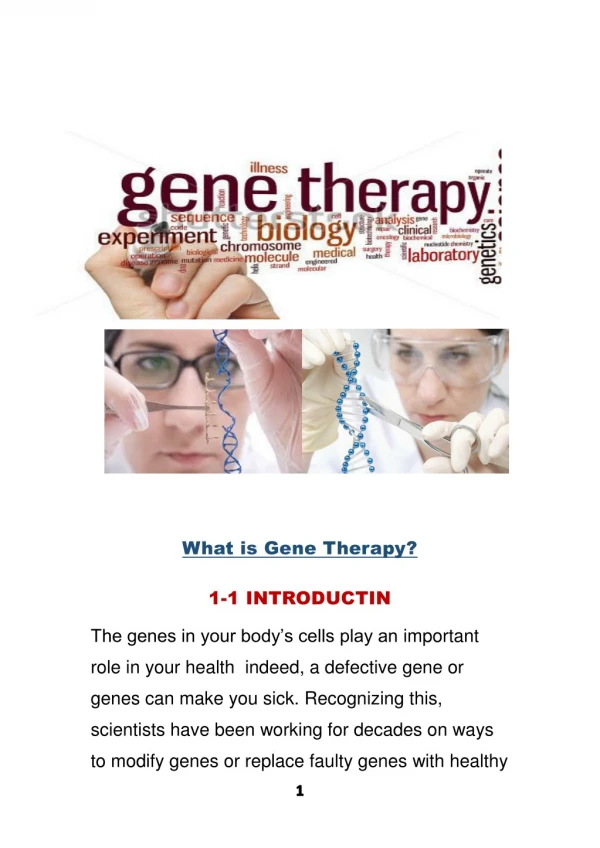
What is Gene Therapy? 1-1 INTRODUCTIN The genes in your body’s cells play an important role in your health indeed, a defective gene or genes can make you sick. Recognizing this, scientists have been working for decades on ways to modify genes or replace faulty genes with healthy
ones to treat, cure or prevent a disease or medical condition. What Are Cells and Genes? How Do They Interact? What is the relationship between cells and genes? Cells are the basic building blocks of all living things; the human body is composed of trillions of them. Within our cells there are thousands of genes that provide the information for the production of specific proteins and enzymes that make muscles, bones, and blood, which in turn support most of our body’s functions, such as digestion, making energy, and growing.[1] 1-2 How Gene Therapy Works? Sometimes the whole or part of a gene is defective or missing from birth, or a gene can change or mutate during adult life. Any of these variations can disrupt how proteins are made, which can contribute to health problems or
diseases[1]. In gene therapy, scientists can do one of several things depending on the problem that is present. They can replace a gene that causes a medical problem with one that doesn’t, add genes to help the body to fight or treat disease, or turn off genes that are causing problems. In order to insert new genes directly into cells, scientists use a vehicle called a “vector” which is genetically engineered to deliver the gene.[1] 1-3 Gene Therapy History: •The double-helix model of DNA was proposed by Watson and Creek in the year 1953. The concepts of chromosomes, genes, etc. developed thereafter. It opened a whole new vista of possibilities and opportunities for the treatment of various hereditary diseases. Research in the field of human genetics gained speed in the 1980s.[2] •The first person to be treated with gene therapy was a four-year-old girl (name not known) from the United States. The lack of production of adenosine deaminase (ADA) made her immune
system weak. Therefore, she became susceptible to many severe diseases.[2] The girl was treated on 14th September, 1990 at the National Institutes of Health's Clinical Center, Bethesda, Maryland. Dr. W. French Anderson and his colleagues at the health center carried on with the proceedings during which the white blood cells were extracted from the body. After the implantation of genes that produce ADA, the cells were transferred back to the girl's body. Considerable improvement was observed in the immune system of the girl.[2] •Meanwhile, the trials of gene therapy continued for many different diseases. The patients suffering from a particular skin cancer called melanoma were treated with the help of gene therapy. Attempts were made for treating cystic fibrosis with gene therapy. Cystic fibrosis is a disease which affects the airways of the respiratory system. However, in this case the process used for implementing the gene therapy was quite complicated.[2]
1-4 What is Gene Therapy? Gene therapy is an experimental treatment that involves introducing genetic material into a person’s cells to fight or prevent disease. Researchers are studying gene therapy for a number of diseases, such as severe combined immune-deficiencies, hemophilia, Parkinson's disease, cancer and even HIV, through a number of different approaches ('Gene Therapy a new tool to cure human diseases').[3] A gene can be delivered to a cell using a carrier known as a “vector.” The most common types of vectors used in gene therapy are viruses. The viruses used in gene therapy are altered to make them safe, although some risks still exist with
gene therapy. The technology is still in its infancy, but it has been used with some success.[3] _ Gene therapy is considered as an alternative for enzyme /protein replacement therapy. The disadvantages like in vivo clearance and manufacturing cost faced by the replacement therapy makes gene therapy a potential alternative for various rare genetic disorders.[4] _In spite of various methods or types of gene therapy, the therapy starts with the identification of mutant gene which is responsible for the cause of the disease. The next step is cloning the identical healthy gene. This is called therapeutic gene or transgene. The therapeutic gene is tailored to the need i.e. to augment or suppress or repair. Once the therapeutic gene is produced it is loaded in a vehicle called vector. The function of the vector is to deliver the therapeutic gene to the patient target cell. After the vector reaches the target cell, it delivers the genetic material to the nucleus. In the nucleus the genetic material gets integrated into DNA and corrects the defective or mutated gene.[4]
The most critical step in achieving gene therapy is choosing the vectors. Sequential key steps in gene therapy are shown in [Table/Fig-1]/ [Table/Fig-1]: Schematic illustration of key steps in gene therapy 1-5 Basic Process of Gene Therapy: -Several approaches to gene therapy are being tested, including:[3]
-Replacingamutatedgene that causes disease with a healthy copy of the gene. -Inactivating, or “knocking out,” a mutated gene that is functioning improperly. -Introducinga new gene into the body to help fight a disease. In general, a gene cannot be directly inserted into a person’s cell. It must be delivered to the cell using a carrier, or vector. Vector systems can be divided into: ViralVectors andNon-viralVectors[3] Types of Gene Therapy Virtually all cells in the human body contain genes, making them potential targets for gene therapy. However, these cells can be divided into two major categories: somatic cells (most cells of the body) or cells of the germ line (eggs or sperm). In theory it is possible to transform either somatic cells or germ cells.[5] 2-1 Germ line gene therapy: Gene therapy using germ line cells results in permanent changes that are passed down to subsequent generations.
If done early in embryologic development, such as during Pre implantation diagnosis and in vitro fertilization, the gene transfer could also occur in all cells of the developing embryo. The appeal of germ line gene therapy is its potential for offering a permanent therapeutic effect for all who inherit the target gene. Successful germ line therapies introduce the possibility of eliminating some diseases from a particular family, and ultimately from the population, forever.[5] However, this also raises controversy. Some people view this type of therapy as unnatural, and liken it to "playing God." Others have concerns about the technical aspects. They worry that the genetic change propagated by germ line gene therapy may actually be deleterious and harmful, with the potential for unforeseen negative effects on future generations.[5] 2-2 Somatic gene therapy: Somatic cells are non-reproductive. Somatic cell therapy is viewed as a more conservative, safer approach because it affects only the targeted cells
in the patient, and is not passed on to future generations. In other words, the therapeutic effect ends with the individual who receives the therapy. However, this type of therapy presents unique problems of its own. Often the effects of somatic cell therapy are short-lived. Because the cells of most tissues ultimately die and are replaced by new cells, repeated treatments over the course of the individual's life span are required to maintain the therapeutic effect. Transporting the gene to the target cells or tissue is also problematic.[5] Regardless of these difficulties, however, somatic cell gene therapy is appropriate and acceptable for many disorders, including cystic fibrosis, muscular dystrophy, cancer, and certain infectious diseases. Clinicians can even perform this therapy in utero, potentially correcting or treating a life- threatening disorder that may significantly impair a baby's health or development if not treated before birth.[5] In summary, the distinction is that the results of anysomatic gene therapyare restricted to the
actual patient and are not passed on to his or her children. Allgene therapyto date on humans has been directed at somatic cells, whereas germ line engineering in humans remains controversial and prohibited in for instance the European Union.[5] 2-3 Type of Somatic gene therapy: Somatic gene therapy can be broadly split into two categories: which means exterior (where cells are modified outside the body and then transplanted back in again). In some gene therapy clinical trials, cells from the patient’s blood or bone marrow are removed and grown in the laboratory. The cells are exposed to the virus that is carrying the desired gene. The virus enters the cells and inserts the desired gene into the cells’ DNA. The cells grow in the laboratory and are then returned to the patient by injection into a vein. This type ofgene therapy is called ex vivo because the cells are treated outside the body.[3]
which means interior (where genes are changed in cells still in the body). This form of gene therapy is called in vivo, because the gene is transferred to cells inside the patient’s. body[3] Gene Delivery In general, a gene cannot be directly inserted into a cell . It must be delivered to the cell using a person’s carrier, or vector . Currently, the most common type of vectors are viruses that have been genetically altered to carry normal human DNA .[6]
Viruses have evolved a way of encapsulating and delivering their genes to human cells in a pathogenic manner.[6] Scientists have tried to harness this ability by manipulating the viral genome to remove disease-causing genes and insert therapeutic ones Target cells such as the patient's liver or lung cells are infected with the vector. The vector then unloads its genetic material containing the therapeutic human gene into the target cell. The generation of a functional protein product from the therapeutic gene restores the target cell to a normal state.[6] 3-1 The Ideal Vector : Genes are made of DNA. Successful gene delivery requires an efficient way to get the DNA into cells and to make it work. Scientists refer to these DNA delivery "vehicles" as vectors.[6] There is no "perfect vector" that can treat every disorder. Like any type of medical treatment, a gene therapy vector must be customized to address the unique features of the disorder.
Part of the challenge in gene therapy is choosing the most suitable vector for treating the disorder.[6] To be successful, a vector must:[6] TARGETthe right cells. If you want to deliver a gene into cells of the liver, it shouldn't wind up in the big toe. INTEGRATEthe gene in the cells. You need to ensure that the gene integrates into, or becomes part of, the host cell's genetic material, or that the gene finds another way to survive in the nucleus without being trashed. ACTIVATE the gene. A gene must go to the cell's nucleus and be "turned on," meaning that it is transcribed and translated to make the protein product it encodes. For gene delivery to be successful, the protein must function properly. AVOID harmful side effects. Any time you put an unfamiliar biological substance into the body, there
is a risk that it will be toxic or that the body will mount an immune response against it.[6] 3-2 Viral Vectors: Mother Nature is a brilliant scientist! Over the last three billion years or so, she's developed an incredibly efficient means of delivering foreign genes into cells: the virus.[7] Usually when we think of viruses, we think of the ones that cause diseases like the common cold, the flu, and HIV/AIDS. But scientists have actually been able to use viruses to deliver DNA to cells for gene therapy. Why reinvent the wheel if there's a perfectly good one out there? If we can modify viruses to deliver genes without making people sick, we may have a good set of gene therapy tools.[7]
- All viruses attack their hosts and introduce their genetic material into the host cell as part of their replication cycle. This genetic material contains basic 'instructions' of how to produce more copies of these viruses, hijacking the body's normal production machinery to serve the needs of the virus .The host cell will carry out these instructions and produce additional copies of the virus, leading to more and more cells becoming infected. Some types of viruses actually physically insert their genes into the host's genome. [7]
This incorporates the genes of that virus among the genes of the host cell for the life span of that cell.[7] - Viruses like this could be used as vehicles to carry 'good' genes into a human cell.[7] remove First , a scientist would the genes in the virus that cause disease. Then they wouldreplace those genes withgenes encoding the desired effect(forinstance, insulin production in the case of diabetics). This procedure must be done in such a way that the genes which allow the virus to insert its genome into its host's genome are left intact.[7] - Many gene therapy clinical trials rely on retroviruses or adenoviruses to deliver the desired gene. Other viruses used as vectors include Adeno- associated viruses, pox viruses, alpha viruses, and herpes viruses. These viruses differ in how well they transfer genes to the cells they recognize and are able to infect, and whether they alter the cell’s DNA permanently or temporarily. [7]
3-3 Advantages of viral vectors: 1) They're very good at targeting and entering cells. 2) Some target specific types of cells. 3) They can be modified so that they can't replicate and destroy cells.[8] 3-4 Drawbacks of viral vectors: a ) They can carry a limited amountof genetic material. Therefore, some genes may be too big to fit into some viruses. b) They can cause immune responsesin patients, leading to potential problems. Patients may get sick c) The immune system may block the virus from delivering the gene to the patient's cells, or it may kill the cells once the gene has been delivered.[8]
Viral Vectors 4-1 Adenoviral Vectors: The adenovirus is a 36-kb double-stranded linear DNA virus that replicates extra-chromosomally in the nucleus. The virus was first isolated from the adenoids of patients with acute respiratory infections, although it can also cause epidemic conjunctivitis and infantile gastroenteritis in humans. In patients with an intact immune system, infections are mild and self-limited.[9]
In immunosuppressed patients, however, infections can result in dissemination to the lung, liver, bladder, and kidney and can be life-threatening. Although human adenovirus type 12 can induce malignant transformation after inoculation into newborn hamsters, adenoviral DNA has not been associated with human tumors. Adenoviral particles are 70 to 100nm in diameter and do not contain membrane.[9] • Use of Adeno viruses Vectors for Gene Therapy : Due to the very efficient nuclear entry mechanism of adenovirus and its low pathogenicity for humans, adenovirus‐based vectors have become gene delivery vehicles that are widely used for transduction of different cell types, especially for quiescent, differentiated cells, in basic research, in gene therapy applications, and in vaccine development.[10] As an important basis for their use as gene medicine, adenoviral vectors can be produced in high titers, they can transduce cells in
vivo with transgenes of more than 30 kb, and they do not integrate into the host cell genome.[10] Recent advances in the development of adenoviral vectors have brought considerable progress on issues like target cell specificity and tropism modification, long‐term expression of the transgene, as well as immunogenicity and toxicity in vivo, and have suggested that the different generations of non‐replicative and replicative vectors available today will each suit best for certain applications. [10]
• Risks of Adenoviral Vectors: There are three potential risks of adenoviral vectors:[9] (1) the development of organ inflammation and dysfunction due to the immune response to adenoviral vector transduced cells. (2) the development of tolerance to an adenoviral vector that could result in fulminant disease upon infection with wild-type virus. (3) the development of wild-type virus. Early generation adenoviral vectors were toxic when administered at high doses. For example, one patient with cystic fibrosis who received an adenoviral vector to the lung had a severe inflammatory response. [9] 4-2Adeno-Associated Vectors: Adenovirus-associated virus (AAV) is a 4.7-kb single-stranded DNA virus that replicates in the nucleus in the presence of adenovirus and integrates into the chromosome to establish a latent
state, AAV has not been associated with disease in humans, although up to 90% of all humans have evidence of prior infection with some serotypes of AAV. Humans are frequently seropositive for AAV2 and AAV3.[9] AAV particles are 18 to 26 nm in diameter and do not contain membrane. They enter the cell by receptor-mediated endocytosis and are transported to the nucleus. Although the receptor has not yet been cloned, entry occurs in a wide range of mammalian species. Wild-type AAV integrates as double-stranded DNA into a specific region of chromosome 19. AAV can also be maintained in an extra chromosomal form for an undefined period of time.[9] Helper Functions of Other Viruses: * AAV are unique in that they usually require co- infection with another virus for productive infection.
•The helper (co-infection) virus is usually adenovirus or herpes simplex virus. Cytomegalovirus and pseudoradies virus can also function as a helper virus. Treatment of cells with genotoxic agents such as ultraviolet irradiation, cycloheximide, hydroxyurea, and chemical carcinogens can also induce production of AAV, albeit at low levels.[9] • USE OF AAVVECTORS FOR GENE THERAPY : A major advantageous characteristic of AAV vectors is their ability to transduce non dividing cells. AAV vectors have been used to transfer genes into a variety of cell types including hematopoietic stem cells in vitroand hepatocytes, brain, retina, lung, skeletal, and cardiac muscle in vivo. Stable expression has been observed for up to one year in several organs. It is not yet clear if the AAV vectors integrate into the host cell chromosome or are maintained episomally.[9] of AAV vectors • A current major LIMITATION
is that they cannot accommodate more than 4.5 kb of exogenous genetic material. • Studies in a variety of animal models indicate that AAV-transduced cells do not elicit an inflammatory reaction or a cytotoxic immune response.[9] •RISKS of AAV Vectors: There are three potential risks of AAV vectors: (1) insertional mutagenesis. (2) generation of wild-type AAV. (3) administration of contaminating adenovirus.
• It is possible that AAV vectors could activate a proto-oncogene or inactivate a tumor suppressor gene by integration into the chromosome in vivo.[9] However, AAV vectors have not been reported to result in malignancy. • Wild-type AAV could be produced when recombination between the vector and the packaging plasmid occurred. However, since AAV has not been shown to be pathogenic and is not capable of efficient replication in the absence of a helper virus, the generation of wild-type AAV may not be a serious concern in human gene therapy.[9] • A final potential problem is a helper virus contaminating preparations of AAV vector and causing adverse effects .Careful testing of AAV vectors for the presence of the helper virus would reduce this risk. it therefore appears that AAV vectors can be considered relatively safe.[9] 4-3 Retroviral vectors:
Overview: For the last two decades, retroviral vectors (RVs) have been major players in the fields of gene transfer and gene therapy. In the early 1980s, they were the first genetic vectors to permit an efficient and stable gene transfer into mammalian cells. [11] In 1990, RVs were the first vectors used in a gene therapy clinical trial (for adenosine deaminase (ADA) deficiency). [12] In 2000, after a decade of hopes and relative frustration, RVs were used in the first successful protocol that actually cured a genetic disease, demonstrating proof of concept for gene therapy.[13]
In all these years, vectors based on the Moloney murine leukaemia virus (MoMLV) have been pivotal in thousands of experiments, and continue to constitute the best tool available for stable gene transfer into a number of cell types and applications. [14] Keys to their enormous success include the relative simplicity of their genomes, ease of use and their ability to integrate into the cell genome, permitting long-term transgene expression in the transduced cells or their progeny. These characteristics render them ideal vectors for a stable correction of genetic defects. [14] RVs are derived from retroviruses, lipid-enveloped particles containing two identical copies of a linear single-stranded RNA genome of around 7–11 kb.[14] They usually require binding to a specific membrane-bound receptor for viral entry. Cells not expressing the appropriate receptor are resistant to
infection by a specific retrovirus. In cytoplasm, viral reverse transcriptase retro transcribes the viral genome into double-stranded DNA(dsDNA), which binds to cellular proteins to form a nucleoprotein preintegration complex (PIC), which contains karyophilic elements that facilitate its migration to the nucleus .[14] RisksofRetroviralVectors: There are two major concerns in the use of retroviral vectors for gene therapy in human: (1) insertional mutagenesis (2) generation of wild-type virus. 1- Insertional mutagenesis occurs when a retroviral vector inserts within or adjacent to a cellular gene. This insertion could result in the development of malignancy through the inactivation of a tumor suppressor gene or by activation of a proto- oncogene.[9] 2- A second safety concern regarding retroviral vectors in human use is viral recombination. Viral
recombination may result in the development of replication-competent virus.[9] 4-4 Herpes Simplex Virus 1: Herpes simplex virus 1 (HSV-1) has a 152-kb double-stranded linear DNA genome that can be maintained episomally in the nucleus of cells. It can cause mucocutaneous lesions of the mouth face, and eyes and can spread to the nervous system and cause meningitis or encephalitis. The related HSV-2 can cause lesions in the genitalia.[15] • HSV can establish a lifelong latent infection in neurons without integrating into the host cell chromosome.[15] Use of HSV-1 Vectors for Gene Therapy: Most vectors based upon HSV-1 have deleted one or more genes necessary for replication. Genes coding for proteins necessary for replication such as infected cell polypeptide (ICP)4 can be deleted. [16] •HSV-1 particles are produced in cells that express these proteins in trans. HSV-1 vectors can
accommodate up to 25 kb of foreign DNA sequences and can establish latency. Moreover, it is readily grown in culture to high titre and has a large genome so allowing it to be used to deliver multiple or very large genes.[16] •Considerable progress has been made in effectively disabling the virus so that it does not damage the cells it infects but can still deliver an inserted gene effectively.[16] • HSV vectors have been used to transfer genes into the brain, spinal cord. As well as its use in the nervous system, the virus has also been used to successfully deliver genes to a variety of other cell types, including peripheral blood mononuclear cells and cardiac myocytes within the intact heart. In particular, its ability to deliver genes effectively to replicating cancer cells and to dendritic cells offers considerable potential for the use of this virus in cancer therapy.[16] Risks of HSV Vectors: There are two major risks of HSV-1-based vectors:
(1) toxicity due to the cytopathic effect of relatively attenuated virus . Administration of high doses of HSV-1 vectors with only a single gene deleted had considerable cytopathic effect. HSV-1 vectors with deletion of four genes had less toxicity.[15] (2) the development of wild-type virus. which can cause serious infections such as encephalitis.[15]
4-5 Risk Factors: The concept of gene therapy seems straightforward, but this is clearly an oversimplification, and numerous problems and risks exist that prevent gene therapy using viral vectors. Viruses can usually infect more than one type of cell. Thus, when viral vectors are used to carry genes into the body, they might infect healthy cells as well as cancer cells. [3] Another danger is that the new gene might be inserted in the wrong location in the DNA, possibly causing harmful mutations to the DNA or even cancer. [3] This has occurred in clinical trials for X-linked severe combined immunodeficiency(X- SCID) patients, in which hematopoietic stem cells were transduced with a corrective transgene using a retrovirus, and this led to the development of T cell leukemia in 4 of 20 patients. In addition, when viruses are used to deliver DNA to cells inside the patient’s body, there is a slight chance that this
DNA could unintentionally be introduced into the patient’s reproductive cells. If this happens, it could produce changes that may be passed on if a patient has children after treatment. Other concerns include the possibility that transferred genes could be overexpressed , producing so much of the missing protein as to be harmful; that the viral vector could cause an immune reaction; and that the virus could be transmitted from the patient to other individuals or into the environment. [3] However, this basic mode of gene introduction currently shows much promise and doctors and scientists are working hard to fix any potential problems that could exist. They use animal testing and other precautions to identify and avoid these risks before any clinical trials are conducted in humans.[3] Non-Viral Vectors 5-1Rationale for Using Non-Viral Vectors: The efficiency of transfecting host cells is relatively high with viral vectors compared to non-viral
methods. The main drawbacks of using virus vectors are its immunogenicity and cytotoxicity.[17] The first related fatality of gene therapy clinical trial was related to the inflammatory reaction to the viral vector (Adenovirus). Additional cause of concern over using viral gene transfer vehicle is the phenomenon known as insertional mutagenesis i.e. ectopic chromosomal integration of viral DNA disrupts the expression of tumor suppression gene or activates oncogene leading to the malignant transformation of cells.[17] Due to its demonstrated reduced pathogenicity, low cost and ease of production, non-viral vectors have important safety advantage over viral approaches. The major advantage of using non-viral vectors is its bio-safety andability to transfer large size gene.[17] Non-viral vectors have drawn significant attention due to its less immunotoxicity.[18] Use of non-viral vectors in clinical trials increased from 2004 to 2013 while that of viral vector saw
significant decrease. Advances in efficiency, specificity, gene expression duration and safety led to an increased number of non-viral vector products entering clinical trials.[18] 5-2 Technical challenges to successful Non- Viral Gene transfer: The major technical limitations or critical steps in attaining a successful gene therapy are categorized into: efficiency of vector transport and unloading into target cells, perseverance, activity, immune response, regulatory issues and ethical concerns and commercialization.[19] These different stages pose a big challenge to gene therapy to be efficiently treating the disease. The cost of gene therapy creates an image that it is meant for the affluent.[19] This was clearly evident with the first commercialized gene therapy Aliopogene tiparvovec for Lipoprotein Lipase deficiency in
November 2013.The estimated treatment cost for LPLD gene therapy is about 1.6million/patient. This tends to be the major hurdle in commercializing the gene therapy if proven successful. [20] Non-viral vectors are generally used to transfer following types of nucleic acids [21-22] Small DNA (Oligodeoxynucleotides) or related molecules synthesized chemically. Large DNA molecules (Plasmid DNA) RNA(Ribozymes, Si RNA, m RNA) 5-3 Naked DNA: “Naked” DNA, which is defined as plasmid DNA (pDNA) administered via non-viral delivery methods, is extensively used as a vector to induce transgene expression in the recipient. This provides several advantages compared to viral vectors like retro-, Adeno- and Adeno-associated viruses that are used for gene therapy. [23] pDNA is relative easy to manufacture, is stable during storage, can contain large inserts and is safer compared to viral vectors in terms of the risk
for genomic integration and adverse reactions. The lower transfection efficiency/rate of naked DNA is considered as the most important disadvantage in comparison to viral vectors.[23] 5-4 Synthetic carrier systems : Synthetic particle carrier systems can also be used to improve the performance of naked DNA. In this approach, DNA is encapsulated into or forms a complex with a synthetic carrier (often a polymer or lipoplex), resulting in DNA-containing particles with a size ranging from 50 nm to a few micrometers. Condensation and encapsulation of DNA into micro- and nanoparticles is extensively used for the delivery of nucleic acids for both in vitro as well as in vivo applications . [23] The majority of particle formulations use electrostatic interaction between anionic phosphate groups in DNA w ith a cationic carrier , usually composed of building blocks with positively charged nitrogen atoms. In the complex formation process, an excess of carrier is used to condense DNA into
positively charged, Nano-sized particles resulting in structures with a size around a few hundred nanometers. Formulation into a particle has several advantages above the usage of naked DNA.[23] First, DNA is against endonuclease - protected mediated degradation. It is known that naked DNA is rapidly degraded upon intramuscular, intradermal or intravenous injection .[23] As compared to naked DNA, pDNA-containing Nano- and micro particles have been shown to exhibit an increased in vitro nuclease resistance and an when injected in increased half - life vivo.[23] Besides protection against nuclease-induced degradation, encapsulation into particles has the potential to of nucleic increase cellular uptake acids, which can lead to higher transfection . It has been shown that both a small efficiencies Nano-scale particle size and a positive surface charge are factors that increase cellular uptake in vitro.[23]
A- Lipoplexes(Cationic lipids): Hundreds of lipids have been developed for gene transfer. All of them share the common structures of positively charged hydrophilic head and hydrophobic tail with linker structure that connects both. The positively charged head group binds with negatively charged phosphate group in nucleic acids and form uniquely compacted structure called lipoplexes.[18] Transfection efficiency depends on overall geometric shape, number of charged group per molecules, nature of lipid anchor and linker bondage. Lipoplexes due to their positive charge electrostatically interact with negatively charged glycoproteins and proteoglycans of cell membrane which may facilitate cellular uptake of nucleic acids.[18] The positively charged lipids surrounding the genetic material help it to protect against intracellular and extracellular nucleases. However the problem lies with surface charge, this reduces
the half-life of lipoplexes circulation in blood limiting its utility not beyond vascular endothelial cells. Neutral polymer like polyethylene glycol (PEG) is used as surface shielding to overcome the excessive charge and to prolong the half- life.[18] -The most common use of lipoplexeshas been in gene transfer into cancer cells, where the supplied genes have activated tumor suppressor control genes in the cell and decrease the activity of oncogenes.[3] Recent studies have shown lipoplexesto be useful in transfecting respiratory epithelial cells, so they may be used for treatment of genetic respiratory diseases such as cystic fibrosis.[3] -lipoplexes are internalized by endocytosis, resulting in the formation of a double-layer inverted micellar vesicle. During the maturation of the endosome into a lysosome, the endosomal wall might rupture, releasing the contained DNA into the cytoplasm and potentially towards the nucleus. DNA
imported into the nucleus might result in gene expression.[24] B- polyplexes (Polymers): Cationic polymers mix with DNA to form Nano sized complex called polyplexes. Polyplexes are more stable than lipoplexes. Polymers are categorized into natural and synthetic polymers. Natural: proteins, peptides, polysaccharides. Synthetic: Polyethylene mine (PEI), Dendrimers, and Polyphosphoesters. [18] - One large difference between the methods of action of polyplexes and lipoplexes is that polyplexes cannot release their DNA load into
the cytoplasm, so to this end, co-transfection with endosome-lytic agents (to lyse the endosome that is made during endocytosis, the process by which the polyplex enters the cell.[3] Physical Methods Gene therapy researchers are more attracted towards physical means of transferring gene material as it is simpler. These methods employ physical force to counteract the membrane barrier of the cells thus facilitating intracellular delivery of the genetic material. [4] 6-1 Needle: The genetic material of interest is administered through a needle carrying syringe into tissue or systemic injection from a vessel. Without any carrier
it is the simplest and safest method of gene transfer. Attractive candidate tissues are muscle, skin, liver, cardiac muscle and solid tumors. However, the efficiency is low due to rapid degradation by nucleases in serum and cleared by mononuclear phagocyte system. [25_26] 6-2 Ballistic DNA(Gene Gun): This method was first used as gene transfer technique to plants. The method is based on the principle of delivering DNA coated heavy metal particles by crossing target tissue at a certain speed. The sufficient speed is achieved by high voltage electronic discharge, or helium pressure discharge. Gas pressure, particle size, dose frequency are the critical parameters in determining the efficiency of gene transfer. Gold, tungsten and silver are used as metal particles and they are typically 1 μm diameter. The major advantage of gene gun is precise delivery of DNA doses. It is most commonly used in gene therapy research in ovarian cancer. [25_26]
6-3 Electroporation : The other terms used for electroporation are gene electro injection, gene electro transfer, electrically mediated gene therapy, electro gene transfer.[4] Applying an electric field that is greater than the membrane capacitance will cause charges of opposite polarity to line up on either side of cell membrane thus forming a potential difference at a specific point on the cell surface. As a result membrane breakdown form a pore and allows the molecule to pass. Pore formation occurs in approximately 10 nanoseconds. The pore of the membrane can be reversible based on the field strength and pulse duration. If it is reversible cells remain viable, otherwise cell death results. Irreversible electroporation is used in cancer treatment to destroy cancer cells. The permeability of the membrane to the gene transfer is controlled by the amplitude and duration of pulse. Currently used field strength are either high field strength [>700V/cm] or low field strength {<700V/cm} with short pulses (microseconds) or long pulses
(milliseconds). Target tissue determines this combination of variables. Generally cancer cells require low field strength with long pulse, whereas muscle cells need short pulse with high field strength. Electroporation has emerged as a reliable physical method for delivering plasmid DNA. The therapy can be delivered by intradermally, intramuscularly or as intratumoural . [4] Gene editing tools Gene editing tools and techniques and techniques
Gene editing (or genome editing) is the insertion, deletion or replacement of DNA at a specific site in the genome of an organism or cell. It is usually achieved in the lab using engineered nucleases also known as molecular scissors.[27] These nucleases create site-specific double-strand breaks (DSBs) at desired locations in the genome. The induced double-strand breaks are repaired through nonhomologous end-joining (NHEJ) or homologous recombination (HR), resulting in targeted mutations ('edits'). [3] -When an errant piece of genetic code is snipped away to create a break in both strands of DNA, the body's natural repair system fixes the damaged DNA. If a new piece of genetic information isn't replacing what's been snipped away, then a process called non-homologous end joining (NHEJ) reconnects the snipped ends. [28] This repair process is error-prone and oftentimes, it results in mutations that halt a gene's activity. If, however, a new piece of genetic information is
replacing what's been snipped away, then the repair work is done by a less common process called homology-directed repair, or (HDR). When this happens, the fixed DNA serves as a template that HDR copies. [28] -gene editing companies can separate genome modifications into one of two experimental categories: Loss of function - functional forms of the genome are removed from the system . Gain of function - active (often mutant) forms of the genome are introduced into the system .[27] There are three families of engineered nucleases being used: [3] Zinc finger nucleases (ZFNs) ZFNs Transcription Activator-Like Effector-based Nucleases (TALENs) TALENs CRISPR-Cas9 system CRISPR- Cas9
-These three approaches differ from one another, but they all involve the use of an engineered nuclease that's guided to a precise location to make an edit. When thinking about gene editing, it may be helpful to picture the nuclease as a pair of scissors and the guide as dots on a piece of construction paper showing someone where to cut. [28] 7-1 Zinc Finger Nucleases (ZFN): Zinc-finger nucleases (ZFNs) are artificial restriction enzymes generated by fusing a zinc finger DNA- binding domain to a DNA-cleavage domain. Zinc finger domains can be engineered to target specific desired DNA sequences and this enables zinc-finger nucleases to target unique sequences within complex genomes. [3] A zinc finger nuclease is a site-specific endonuclease designed to bind and cleave DNA at specific positions.[3] ZFNs are comprised of two component parts:[27] DNA-binding domain.
DNA-cleaving domain - nuclease domain of FokI. 1.DNA-binding domain: The DNA-binding domains of individual ZFNs typically contain between three and six individual zinc finger repeats and can each recognize between 9 and 18 base pairs. If the zinc finger domains are perfectly specific for their intended target site then even a pair of 3- finger ZFNs that recognize a total of 18 base pairs can, in theory, target a single locus in a mammalian genome. The most straightforward method to generate new zinc-finger arrays is to combine smaller zinc-finger "modules" of known specificity. The most common modular assembly process involves combining three separate zinc fingers that can each recognize a 3 base pair DNA sequence to generate a 3-finger array that can recognize a 9 base pair target site.[3] 2.DNA-cleavage domain: The non-specific cleavage domain from the type