Enhancing Teacher Quality in Chemistry Education: A Comprehensive Workshop Overview
The "No Child Left Behind" workshop conducted at FHSU and ESU from July 2006 to June 2007 aimed to improve science and mathematics teaching quality among 48 participating middle and high school teachers. The program, featuring structured modeling instruction, garnered positive feedback, with many teachers rating their experience highly. Key outcomes included enhanced instructional clarity, increased confidence in laboratory activities, and the successful integration of modeling techniques into classrooms. This report highlights significant gains in student achievement across various chemistry topics.

Enhancing Teacher Quality in Chemistry Education: A Comprehensive Workshop Overview
E N D
Presentation Transcript
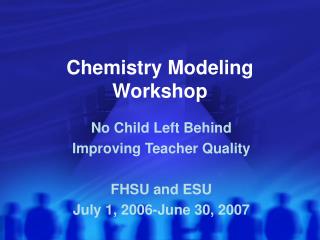
Chemistry Modeling Workshop No Child Left Behind Improving Teacher Quality FHSU and ESU July 1, 2006-June 30, 2007
Participants • 48 Teachers (Middle and High School) • Science and/or Mathematics Degree(s) • 24 Males and 24 Females • Rural, Urban, Suburban, Inner City • 48 Schools Served • 36 Districts Served
Modeling Instruction Survey • Rate your workshop (1-10 scale) • Total # of teachers rating 8 or higher • FHSU 22 (N=22), ESU 19 (N=23) • 2 teachers did not reply • Materials structured into modeling • Teachers responding very well or excellent • FHSU 19 (N=22), ESU 17 (N=23) • Comments
Modeling Instruction Survey • Clarity of modeling instruction workshop • Teachers responding clear or very clear • FHSU 18 (N=22), ESU 17 (N=23) • Modeling contribute to your teaching • Teachers responding were already using modeling • FHSU 7 (N=22), ESU 5 (N=23) • Teachers responding would integrate modeling • FHSU 15 (N=22), ESU 18 (N=23)
Modeling Instruction Survey • Expectations fulfilled • Teachers responding beyond expectations • FHSU 18 (N=22), ESU 15 (N=23) • Views about teaching chemistry • Teachers responding enhance teaching • FHSU 7 (N=22), ESU 5 (N=23) • Teachers responding reinforce practices • FHSU 15 (N=22), ESU 18 (N=23)
Modeling Instruction Survey • Laboratory Activities • Teachers responding very valuable • FHSU 11 (N=22), ESU 10 (N=23) • Whiteboarding • Teachers responding very valuable • FHSU 13 (N=22), ESU 14 (N=23) • Printed Materials • Teachers responding very valuable • FHSU 11 (N=22), ESU 11 (N=23)
Modeling Instruction Survey • Logger-Pro/Graphical Analysis • Teachers responding somewhat or very confident • FHSU 20 (N=22), ESU 19 (N=23) • Vernier Lab-Pro/CBL • Teachers responding somewhat or very confident • FHSU 17 (N=22), ESU 19 (N=23) • Marratech/KanEd • Teachers responding somewhat or very confident • FHSU 15 (N=22), ESU 7 (N=23)
Modeling Instruction Survey • Writing/Modifying Materials for Modeling • Teachers responding very confident • FHSU 8 (N=22), ESU 12 (N=23) • Teachers responding somewhat confident • FHSU 14 (N=22), ESU 11 (N=23) • Comments Workshop Leaders • Comments or Recommendations
Increased Student Achievement • Types of Substances • Mixtures and Pure Substances • #1 Gain = .35 (M) & .30 (F) • #2 Gain = N/A • #3 Gain = N/A • Compounds and Elements • #1 Gain = .74 (M) & .78 (F) .36 (M) & .38 (F) • #2 Gain = N/A • #3 Gain = .80 (M) & .60 (F) .38 (M) & .52 (F)
Increased Student Achievement • Transformation of Matter • Phase Changes • #1 Gain = N/A • #2 Gain = N/A • #3 Gain = N/A • Solubility • #1 Gain = .77 (M & F) • #2 and #3 Gain = .55 (M & F)
Increased Student Achievement • Energy in Matter Transformation • Energy in Phase Transformations • #1 Gain = .62 (M) & .60 (F) • #2 Gain = N/A • #3 Gain = N/A • Energy in Chemical Reactions • #1 Gain = .61 (M) & .71 (F) • #2 Gain = .40 (M) & .66 (F) • #3 Gain = .50 (M) & .41 (F)
Increased Student Achievement • Periodic Table • Periodic Trends in Physical Properties • #1 Gain = .53 (M) & .40 (F) .48 (M) & .40 (F) • #2 Gain = .38 (M) & .33 (F) .17 (M) & .19 (F) • #3 Gain = .57 (M) & .47 (F) • Periodic Trends in Chemical Properties • #1 Gain = .40 (M) & .53 (F) .40 (M) & .53 (F) • #2 Gain = .47 (M & F) .41 (M) & .53 (F) • #3 Gain = .41 (M) & .53 (F) .71 (M) & .74 (F)
Increased Student Achievement • Chemical Reactions • Chemical Reactions vs. Physical Changes • #1 Gain = .33 (M) & .28 (F) .27 (M) & .26 (F) • #2 Gain = N/A • #3 Gain = N/A • Types of Chemical Reactions • #1 Gain = N/A • #2 Gain = .79 (M) & .67 (F) .38 (M) & .50 (F) • #3 Gain = N/A
Increased Student Achievement • Conservation of Energy and Matter • Conservation of Matter in Chemical Changes • #1 Gain = N/A • #2 Gain = N/A • #3 Gain = N/A • Conservation of Energy in Transformations • #1 Gain = .61 (M) & .58 (F) .17 (M) & .20 (F) • #2 Gain = N/A • #3 Gain = N/A
Increased Student Achievement • Applications of Chemistry • Chemistry and better health • #1 Gain = .31 (M) & .35 (F) .51 (M) & .38 (F) • #2 Gain = .42 (M) & .49 (F) .29 (M) & .38 (F) • #3 Gain = N/A • Chemistry and the Environment • #1 Gain = .43 (M) & .50 (F) • #2 Gain = .37 (M) & .30 (F) • #3 Gain = N/A
Increased Student Achievement • Kinematics and Dynamics • Acceleration • #1 Gain = N/A • #2 Gain = N/A • #3 Gain = N/A • Newton’s Second Law • #1 Gain = .85 (M) & .74 (F) • #2 Gain = .75 (M) & .84 (F) • #3 Gain = .88 (M) & .70 (F) .54 (M) & .76 (F)
2007-2008 Implementation & Evaluation • Revised Template-EarthScienceUnitEval • Each Participant • Group Number & Letter • Team Member Name • Grade Taught • Demographics • Environment (rural/urban/suburban) • Ethnic, Cultural, Gender Make-up • Socio Economic Status (SES) • Students with Special Needs
2007-2008 Implementation & Evaluation • Revised Template-EarthScienceUnitEval • Learning Goal and Objectives • Developed in Modeling Workshop • A Unit Your Team Developed • Instructional Design and Implementation • Developed in Modeling Workshop • Lesson Planning Part of the Implementation • Estimate Time of Year Unit Will be Taught • Possible Visit from Workshop Instructor
2007-2008 Implementation & Evaluation • Analysis of Assessment Procedures • Each Participant (Your Unit ONLY) • Reflection and Self-Evaluation • Successful Activities • Unsuccessful Activities • Student Performance on State Assessments • Professional Development/Personal Goals
2007-2008 Implementation & Evaluation • Implementation & Evaluation Submission • End of Workshop - 1 Document from Group • Information from Each Participant • Demographics • Learning Goals and Objectives • Instructional Design and Implementation • By KATS Camp - 1 Document from Group • Data from Each Participant over Unit Taught • Analysis of Assessment Procedures • Reflection and Self-Evaluation • Email to bwalizer@fhsu.edu