Download
1 / 12
120 likes | 251 Vues
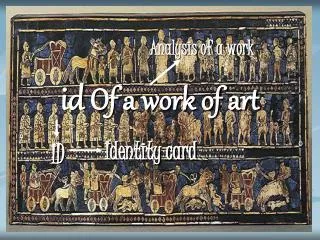
Discover the fascinating artifact known as the Standard of Ur, excavated by archaeologist Leonard Woolley in the 1920s from a royal cemetery in Southern Iraq. Dating back to approximately 2600-2400 BC, this Sumerian work of art features two distinct panels. The "War" panel portrays battle scenes with chariots and soldiers, while the "Peace" panel depicts a lavish banquet with musicians and seated figures. This masterpiece offers a glimpse into the social and military life of ancient Mesopotamia, displaying the rich artistry and culture of the Sumerians.

E N D
Analysis of a work id Of a work of art Identity card ID o
WHAT? The Standard of Ur A Sumerian work A panel
WHO? …found it? LEONARD WOOLLEY Profession: archaeologist
At UR, Southern Iraq YESTERDAY In one of the largest graves (=tombe)in the Royal Cemetery WHERE? British Museum, TODAY IN LONDON
when About 2600 /2400 BC but excavated in the 1920s
The Standard of Ur has two panels: DESCRIPTION PEACE WAR &
1. WAR: it represents the Sumerian army. Battle scenes: we can see four-wheeled chariots, drown by some sort of equids (= horses), soldiers, otherinfantrymen with knives or axes. 2. PEACE: It portrays a banquet scene. We can see animals, fish and other goods before seated figures.Musicians play some instruments (a lyrist) There is also a woman singing!!! THE TWO PANELS
other architecture Sculpture {statue} what painting
Who did it? Who made it? Who painted it? The painter who? The artist The sculptor The architect