Nets
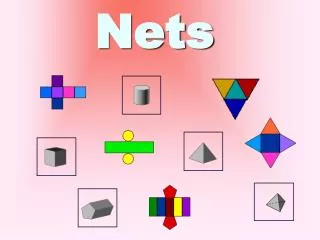
This guide provides detailed insights into constructing geometric models, specifically the cuboid and pyramid. The cuboid features three pairs of equal faces, allowing for equal heights when folded, with tabs positioned on alternate edges for easy assembly. The square-based pyramid consists of a square base and four congruent isosceles triangles, also utilizing tabs on alternate edges. Helpful hints include the importance of using a sharp pencil for precision, scoring the card for easier folding, and the classic advice to measure twice and cut once.


Nets
E N D
Presentation Transcript
B C A C B A The Cuboid • Summary: • 3 pairs of equal faces • Equal heights when folded • Tabs on alternate edges
General Hints • Use a sharp pencil • Score the card to make folding easier • Make the tabs wide enough to glue, but narrow enough so that they don’t interfere with the object itself Measure twice, cut once!
B B B B The Square-based Pyramid A • Summary • A square (A) • 4 congruent isosceles triangles (B) • Tabs on alternate edges
B B B B The General Pyramid A • Summary • An n-sided polygon (A) • n congruent isosceles triangles (B) • Tabs on alternate edges