ENCAPSULANTS
This overview discusses the essential role of encapsulants like epoxies, polyimides, and silicones in protecting electronic chips. It highlights how moisture permeability affects encapsulation, detailing material properties, microcrack vulnerabilities, and the impact of fillers. Additionally, it addresses failure risks such as resistive shorts caused by moisture ingress, emphasizing the importance of choosing appropriate encapsulants to ensure longevity and reliability in electronic devices.

ENCAPSULANTS
E N D
Presentation Transcript
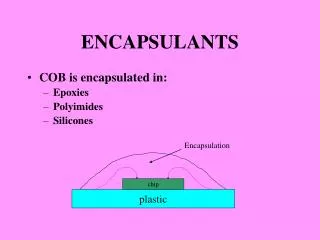
ENCAPSULANTS • COB is encapsulated in: • Epoxies • Polyimides • Silicones Encapsulation chip plastic
ENCAPSULATION PROPERTIES • Moisture permeability depends on: • material (organics inferior to ceramics and metals) • microcracks (e.g. around leads) • fillers This is just one type of failure as a consequence of moisture getting to the chip Migrated gold resistive shorts due to moisture ingress