The Evolution of Ancient Egypt: From the Old Kingdom to Empire
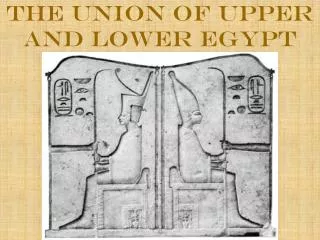
Over the course of its history, Egypt underwent significant transformations, beginning with the unification of Upper and Lower Egypt during the Old Kingdom (2575-2130 BCE), when the first Pharaohs emerged. The Middle Kingdom (1938-1630 BCE) saw enhanced trade, religious reforms, and greater access to the afterlife for all. The New Kingdom (1539-1079 BCE) marked the expansion of Egypt into an empire, with notable Pharaohs like Hatshepsut and Akhenaten steering religious and cultural changes. Central to Egyptian identity was a powerful bureaucracy, monumental architecture, and a rich pantheon of gods.

The Evolution of Ancient Egypt: From the Old Kingdom to Empire
E N D
Presentation Transcript
Quaestio: What changes did Egypt experience over the course of its history?Nunc Agenda: Answer the following question individually in your notebooks:“What do you think is the best job to have and why?”
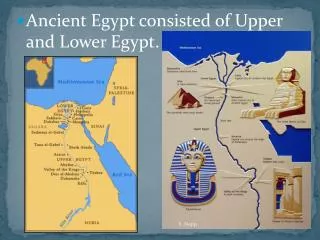
Delta LOWER EGYPT The Nile flows South to North UPPER EGYPT
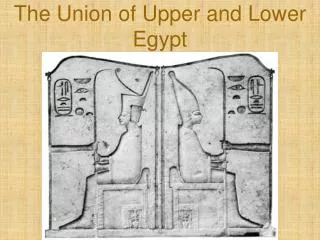
Old Kingdom(2575-2130 BCE) • Upper and Lower Egypt UNITED! • First dynasty (ruling family) comes to power • Kings, called Pharaohs, seen as gods • Strong government with bureaucracy (many government jobs/positions like the vizier) • Pyramids built as tombs for Pharaohs
Middle Kingdom(1938-1630 BCE) • Fought and traded with Nubia • Northern god Ra + Southern god Amun = Amun Ra! (main god) • Osiris = very popular god of the dead • Religion became more equal, anyone can have a good afterlife (not just Pharaoh) by being a good person • 1700 BCE: Egypt conquered by Hyksos, people from the Levant, for 100 years, until the Egyptians took it back
New Kingdom(1539-1079 BCE) • Egypt expanded to be an empire, conquered the Levant and fought Hittites • Interesting Pharaohs • Hatshepsut: Female Pharaoh, wore fake beard • Akhenaten: Changed the capital and the Egyptian religion to worship Aten (sun disc god)
Rosetta Stone