Understanding a Cell Model: Investigating Molecules and Their Journey into Our Cells
In this journal entry titled "A Cell Model," we explore the fascinating process by which the food we eat enters our bloodstream and ultimately reaches our cells. We focus on three essential types of food molecules: starch (a complex carbohydrate), glucose (a simple carbohydrate and primary energy source), and protein (coded by DNA and synthesized in cells). Utilizing indicators like Lugol's iodine, Biuret solution, and glucose test strips, we will develop investigative questions and hypotheses regarding the movement of these molecules across semi-permeable membranes. Join us as we delve into the experimental procedure to enrich our understanding of cellular biology.

Understanding a Cell Model: Investigating Molecules and Their Journey into Our Cells
E N D
Presentation Transcript
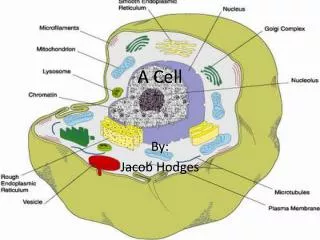
A cell model • Begin a new journal entry titled “A Cell Model”. (Make sure this is in your table of contents) • QOTD: How does the food we eat get into our bloodstream, and eventually our cells?
Food Molecules • I have three types of molecules in these tubes – Starch, Protein, and Glucose. • Starch – Complex Carbohydrate • Glucose – Simple Carbohydrate – Also, the primary energy source for your body • Protein – Coded for by DNA – Made in the cells.
Indicator • An indicator is a known solution or substance that reacts when in the presence of specific molecules or types of molecules. • Lugol’s Iodine – Indicates the presence of Starch • Biuret Solution – Indicates the presence of Protein • Glucose Test Strip – Indicates the presence of Glucose
Materials List • 20 ml Syringe • Glucose, Starch, or Protein Solution • Lugol’s Iodine, Biuret, or Glucose test strips. • One 7 inch piece of Dialysis Tubing • Two 3 inch strings • One plastic cup • Distilled water • Electronic Balance
Pair off into teams at your tables • We will be working in groups of two (three only if necessary) • Work with your partner today to develop an investigative question, a hypothesis, and a procedure
Investigative Question • This question needs to ask about the relationship between at least two variables. • It must be able to be answered using the materials we have. • Can _________ cross a semi permeable membrane?
Hypothesis • If, then, because – but it doesn’t have to be in those exact words. • A good hypothesis does the following: • 1. States the relationship between a manipulated variable and the responding variables • 2. States why the manipulated variable will cause a change in the manipulated variable.
Procedure • This must be written so that someone else could reproduce your results. People omit a lot of steps because they think they are obvious. They are not. • Must be numbered, logical sequence that will include all steps necessary to complete both days of this lab.